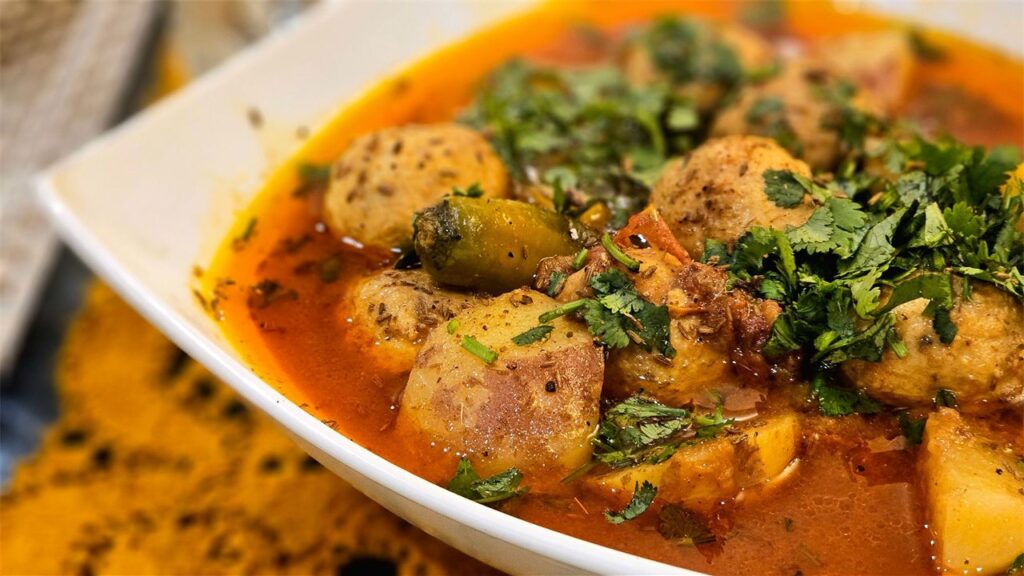
Potatoes not cooking in curry is usually a sauce problem, not a potato problem. Tomato, tamarind and yogurt are acidic, and acid keeps potatoes firm long after they would have gone soft in plain water.
Here is the rescue for tonight, then the seven causes and a timing table for next time.
Quick answer
Why are my potatoes not cooking in curry?
Acid from tomato, tamarind or yogurt slows the softening of potatoes. Other causes are a sauce that barely simmers, too little liquid, large or uneven pieces, waxy or old potatoes, and adding them too late. To fix it, lift them out, boil or microwave them in plain water until tender, and return them to the curry.
How to fix hard potatoes in curry tonight
- Lift them out. Use a slotted spoon, and turn the curry off so it does not scorch.
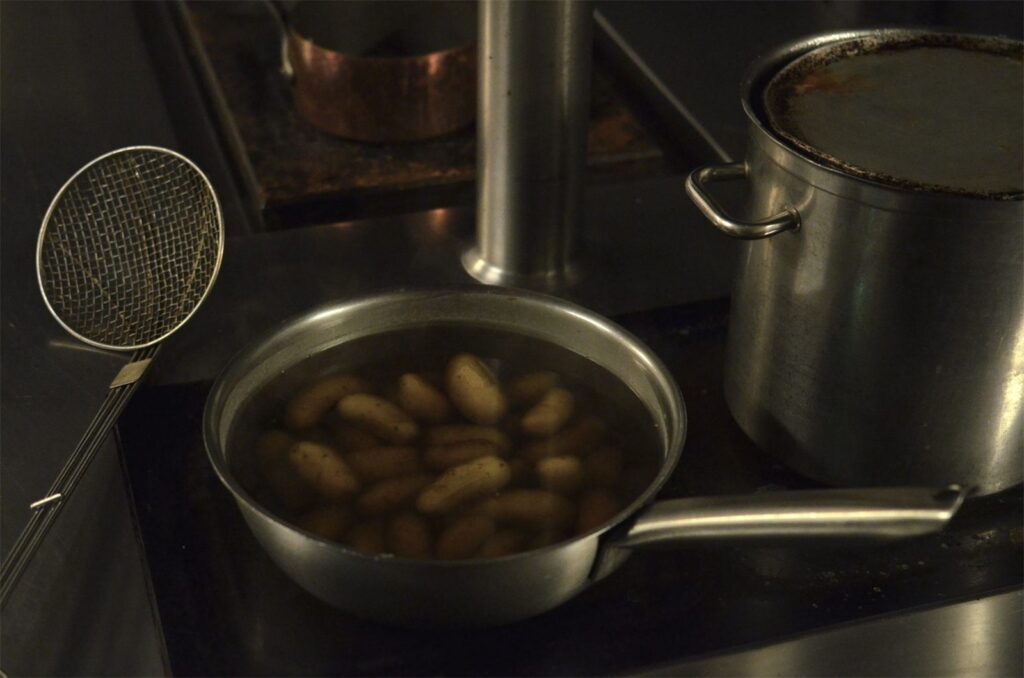
- Cook them in plain water. Cover with water, boil, and cook until a fork slides in. Half-cooked cubes often need only 5 to 10 minutes.
- Or use the microwave. Put them in a covered microwave-safe dish with a splash of water. A University of Nebraska recipe cooks a family dish of raw chunks in about 10 minutes on high, stirred once, so check yours from 4 minutes.
- Return and rest. Drain, fold them back in, and simmer a few minutes. Swasthi Shreekanth of Swasthi’s Recipes then rests them in the gravy for 15 minutes.
This is also the first advice from the Idaho Potato Commission, whose Dr. Potato answer about potatoes still hard in red sauce says to boil them in plain water and add them back.
Potatoes not cooking in curry: 7 causes and fixes
| Cause | Clue | Fix |
|---|---|---|
| 1. Acidic sauce | Lots of tomato, tamarind, vinegar or yogurt; the outside stays firm | Finish in plain water; next time parboil |
| 2. Heat too low | Hardly a bubble, or the lid is off | Cover and raise to a steady simmer |
| 3. Too little liquid | Potatoes sit above the sauce, dry on top | Add hot water to almost cover, put the lid on |
| 4. Big or uneven pieces | Small ones soft, large ones hard in the middle | Halve the large ones; cut to one size next time |
| 5. Waxy potatoes | Red, fingerling or new potatoes | Allow more time; they will not go fluffy |
| 6. Old potatoes | Sprouting, wrinkled or long stored | Boil first, then add |
| 7. Added too late | The chicken or vegetables are done and the potatoes are not | Cook separately; next time add earlier |
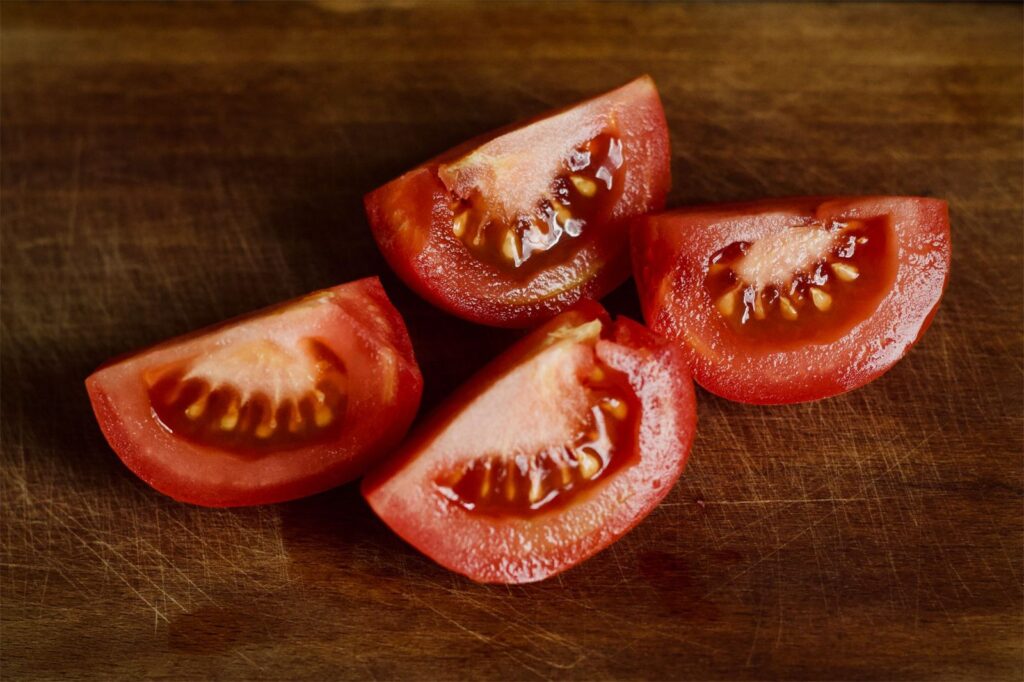
Do tomatoes stop potatoes from softening?
They slow it down a lot. Sources agree on the result but explain it differently:
- Cell walls: the Idaho Potato Commission says acid from tomatoes or vinegar strengthens them.
- Pectin: J. Kenji López-Alt, in the Serious Eats roast potato guide, points to pectin, the glue between cells: it starts to break down at around 183°F, and the more acidic the water, the less it breaks down.
- Starch: Shirley Corriher, quoted by the Commission, says starch granules will not swell and soften in acid. In Corriher’s example, potatoes cooked with an acidic vinaigrette stayed rock hard even when cut to the size of rice.
The same thing happens to lentils, as explained in why dal is not cooking soft. Canned tomatoes count too. Swasthi calls them highly acidic and parboils potatoes first when using them; fresh vs canned tomatoes for curry covers what is in the can. With tamarind, stir it in at the end, as with any sour tamarind paste substitute.
Does baking soda help?
It can, but treat it as a last resort. Idaho’s answer suggests 1/2 teaspoon in the pot when the sauce is not too acidic. That can taste soapy, so start with a pinch. If the sauce itself tastes sharp, use the gentler fixes in how to balance a curry that is too sour.
Heat and liquid: why a bare simmer is not enough
If pectin only begins to break down at around 183°F, a pot that steams without bubbling leaves the potatoes near the edge of cooking. Swasthi brings the curry to a rolling boil, lowers it to medium, covers it, and checks every 3 to 4 minutes, adding hot water when needed.
Thin a thick masala until the potatoes are almost covered, cook them, then reduce it with the lid off. Our guide on how to thicken curry has nine ways to bring the body back.
How long do potatoes take to cook in curry?
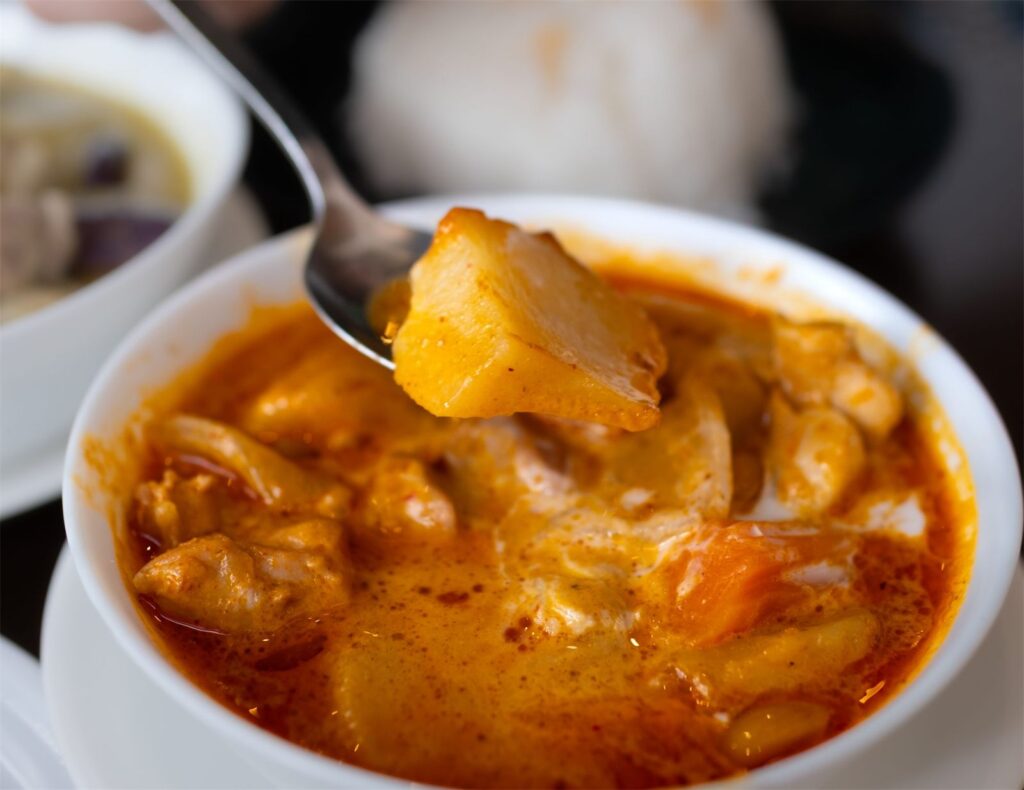
Plan on about 25 minutes for small cubes cooked in the gravy and about half that in plain water. Swasthi’s potato curry, with 3/4-inch cubes, takes about 25 minutes once the potatoes are in. Test with a fork.
| Potato | Method | Time | Source |
|---|---|---|---|
| 3/4-inch cubes | Covered, in an onion tomato gravy | About 25 minutes | Swasthi’s Recipes |
| 1-inch cubes | Simmered in water | 10-12 minutes after it boils | Alphafoodie |
| 1-inch cubes | Instant Pot, in the curry, quick release | 4 minutes, high pressure | Swasthi’s Recipes |
| Small whole, about 1 ounce | Simmered in water | About 15 minutes | Alphafoodie |
| Large cubes, to parboil | Boiling water | 4-6 minutes | Idaho Potato Commission |
Should you boil potatoes before adding them to curry?
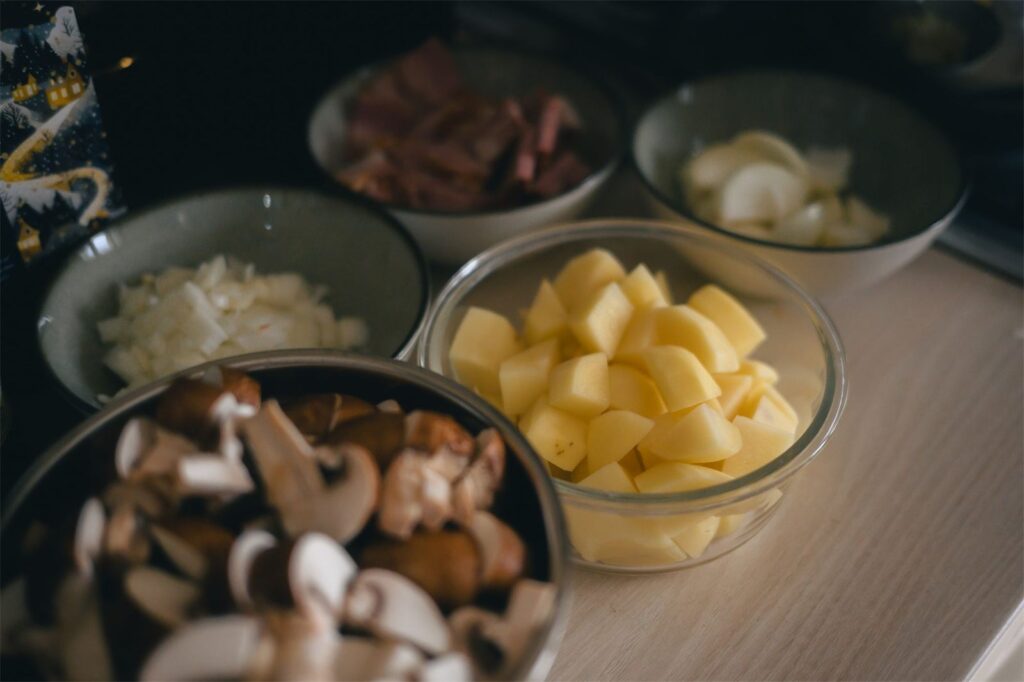
Yes, when the sauce is very tomatoey, when you use canned tomatoes, or when the potatoes are old. Boil the cubes until the edge gives but the center is still firm, then finish them in the gravy. In a mild onion or coconut sauce, cook them straight in the pot.
Baby potatoes cook unevenly when the sizes are mixed. Cut the big ones to match, parboil, then prick each one with a fork, as Swasthi does for dum aloo, so the gravy can get in.
With meat, watch both clocks. Potatoes that need 25 minutes can outlast chicken breast, and chicken overcooked in curry turns tough.
What are the best potatoes for curry?
Yukon Gold is the safe choice for most curries. Saveur classes it as all-purpose, with enough starch to mash and enough firmness for soup, and Chowhound’s curry guide picks it along with red potatoes. Russets cook soft but fall apart: in one long-simmered stew, Saveur’s russets all but disintegrated.
Waxy types trade speed for shape. The Idaho Potato Commission lists red and fingerling potatoes, along with older stored ones, among those that may take longer to soften.
The opposite problem: potatoes gone mushy
Once a fork slides in, stop. Stir as little as possible. Mash any broken ones into the sauce. Boiled potatoes also turn soft and crumbly in the freezer, so see how to freeze curry before you store leftovers.
Frequently Asked Questions
Why are my potatoes not cooking in curry?
Usually because the sauce is acidic, the heat is too low or the pieces are too big. Move them to plain boiling water until tender, then return them.
Do tomatoes stop potatoes from softening?
They slow it down. Acid keeps the structure of the potato firm, so parboil potatoes for a tomato-heavy curry.
How long do potatoes take to cook in curry?
About 25 minutes for 3/4-inch cubes in a covered gravy, or 10-12 minutes for 1-inch cubes in plain water. Test with a fork.
Should you boil potatoes before adding them to curry?
It helps with canned tomatoes, tamarind or old potatoes. Parboil them until just short of done and finish in the sauce.
What are the best potatoes for curry?
Yukon Gold for balance, red potatoes to hold their shape. Russets soften but tend to break up.
How do you fix hard potatoes in curry?
Lift them out, boil or microwave them in plain water until a fork slides in, and fold them back into the sauce.
Next: every other pot problem, in the complete guide to fixing curry.