Can you freeze curry? Yes, and most Indian curries freeze very well. Tomato, onion and lentil based curries come back from the freezer almost unchanged. Curries with yogurt, cream or potatoes also freeze safely, but their texture can change, so a few small tricks help. Below are the fridge and freezer times from US food safety guidance, a freezing table by curry type, and the safe way to reheat.
Quick answer
Can you freeze curry?
Yes. Refrigerate cooked curry within 2 hours and eat it within 3 to 4 days, or freeze it for best quality within about 3 to 4 months. Reheat until it reaches 165°F, and bring saucy curries to a rolling boil. Dairy and potato curries freeze safely but may separate or turn soft.

How long does curry last in the fridge?
Cooked curry lasts 3 to 4 days in the fridge. That is the standard window for cooked leftovers in US food safety guidance, including the University of Illinois Extension guide to leftovers, which follows USDA advice. Refrigerate the curry within 2 hours of cooking, and label the container with the date. If you will not eat it within 3 to 4 days, freeze it instead.
Cool it quickly. University of Nebraska-Lincoln Extension advises dividing large batches into shallow containers no more than about 3 inches deep, and cooling big pots of soup or stew in an ice bath. A deep pot of curry put straight in the fridge stays warm in the center for too long.
How long can you freeze curry?
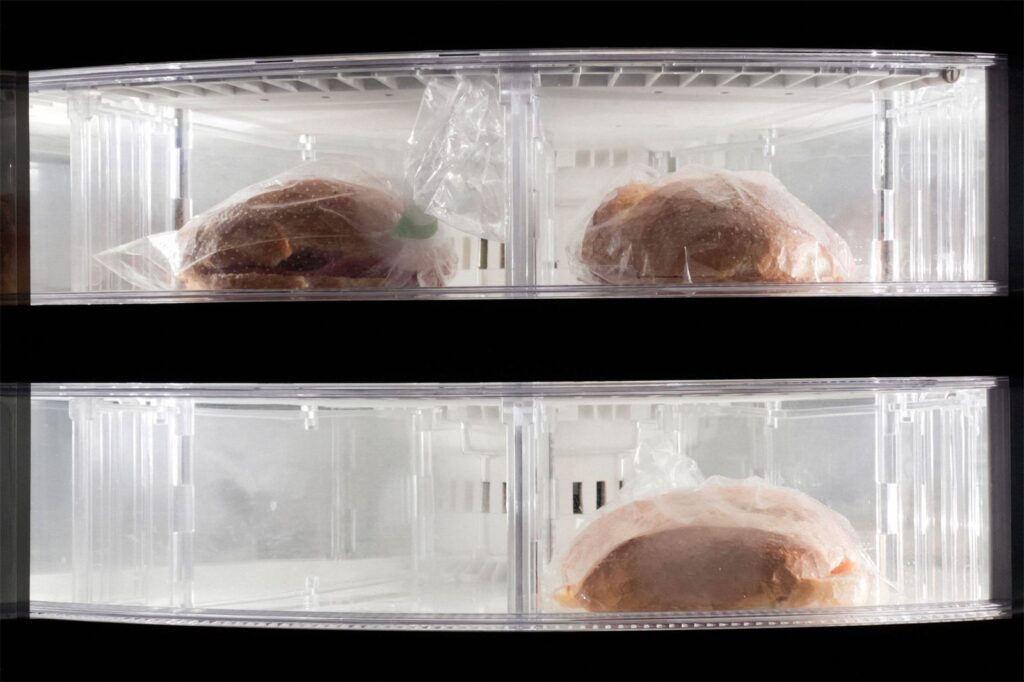
For best quality, eat frozen curry within about 3 to 4 months. The Illinois Extension gives 3 to 4 months for frozen leftovers, and Nebraska Extension gives a range of 2 to 6 months. Both note that this is about quality, not safety: food kept frozen at 0°F stays safe indefinitely, but it slowly loses moisture and flavor. Freeze curry in airtight containers or flat freezer bags with the air pressed out.

Which curries freeze well?
The base of most curries (onion, tomato, spices and oil) freezes very well. Trouble comes from a few ingredients. The Oregon State University Extension list of foods that do not freeze well warns that boiled potatoes turn “soft, crumbly, water-logged, mealy,” milk sauces and gravies “may curdle or separate,” sour cream separates and turns watery, and cooked rice becomes mushy. This table applies that to common curries.
| Curry type | Freezes well? | What can change | Tip |
|---|---|---|---|
| Tomato or onion based meat curry | Yes | Very little | Freeze in meal-size portions |
| Dal and chickpea curries | Yes | Thickens; may need water when reheating | Add a splash of water and stir |
| Cream based (butter chicken, korma) | Fair | Sauce may separate or look grainy | Freeze before adding cream; add it when reheating |
| Yogurt based curries | Fair to poor | Likely to separate | Freeze the base, stir in tempered yogurt after reheating |
| Coconut milk curries | Fair | Often looks split after thawing | Whisk well while reheating |
| Potato curries (aloo) | Fair | Potatoes turn soft and mealy | Freeze without potatoes, add fresh ones later |
| Spinach curries (saag, palak) | Yes | Slightly darker color | Add cream or paneer after thawing |
| Curry with rice mixed in | Poor | Rice turns mushy | Freeze rice separately or cook it fresh |
The potato, dairy and rice rows follow the Oregon State list; the other rows are a rule of thumb rather than a tested result. If you cook rice fresh instead, see our guide to basmati rice water ratio in an Instant Pot.
Can you freeze curry with cream or yogurt?
Yes, it is safe, but the sauce may separate when it thaws. Milk-based sauces can curdle or separate after freezing, and yogurt is the most likely to split. The best approach is to freeze the curry before you add the dairy, then stir in cream or tempered yogurt while reheating. If a creamy curry has already been frozen, whisk it hard or blend it briefly while reheating. Our guide on fixing yogurt that curdled in curry explains the tempering steps.
How do you reheat frozen curry?
Reheat curry until it is steaming hot all the way through and reaches 165°F on a food thermometer. You can thaw it first in the fridge (overnight is a good rule of thumb) or reheat it straight from frozen, which Nebraska Extension notes is safe but slower. For saucy dishes like curry, Nebraska Extension advises bringing sauces, soups and gravies to a rolling boil.
- Stovetop: put the curry in a saucepan with a splash of water, cover, and heat over medium-low, stirring often until it boils.
- Microwave: use a microwave-safe container, cover it, and stir every couple of minutes so it heats evenly.
- Not a slow cooker: it heats too slowly, leaving food too long between 40°F and 140°F.
- Cold-water thawing: seal the curry in a leak-proof bag, and cook it before refreezing.
There is a tension for dairy curries: a rolling boil is the safety advice, but boiling can split cream or yogurt. Freezing the base without dairy solves this, since you boil the base first and add the dairy at the end.

Can you refreeze curry?
Sometimes. Nebraska Extension says food thawed in the refrigerator can be refrozen, while food thawed in cold water or the microwave should be cooked before refreezing. Each freeze and thaw costs texture, though, especially for meat, potatoes and dairy. The simplest rule is to freeze curry in single-meal portions, so you only thaw what you will eat and never need to refreeze.
Why is my curry grainy after reheating?
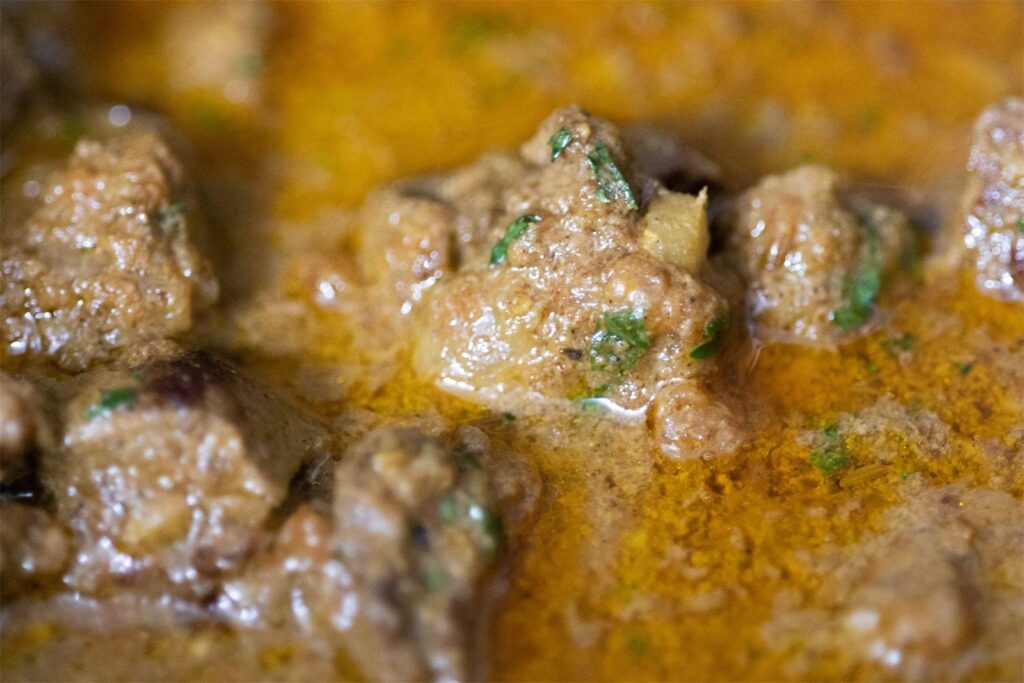
Grainy curry after reheating usually comes from dairy. Cream, yogurt and sometimes coconut milk separate during freezing or when they boil, so the proteins clump and the fat pools. Whisk the sauce hard off the heat, add a splash of water or cream, or pulse it briefly with a stick blender. If oil pooled on top, our guide on how to remove excess oil from curry shows how to skim it.
Reheated curry can also thicken a lot, especially dal, which has its own fridge and freezer times (see how long dal lasts); see how to thicken or loosen a curry for adjusting the texture. If it tastes flat after the freezer, the checklist in why a curry tastes bland helps, and reducing a sauce can concentrate salt; see how to fix a curry that is too salty. Our complete guide to fixing curry covers everything else, and the Fix My Curry section lists every quick fix.
Frequently Asked Questions
How long does curry last in the fridge?
Cooked curry keeps 3 to 4 days in the fridge. Refrigerate it within 2 hours of cooking, in shallow containers, and freeze anything you will not eat in that time.
Can you freeze curry with cream or yogurt?
Yes, it is safe, but the sauce may separate when thawed. For the best texture, freeze the curry before adding the cream or yogurt and stir it in while reheating.
Can you refreeze curry?
Curry thawed in the fridge can be refrozen, but the texture suffers. Curry thawed in cold water or the microwave should be cooked before refreezing. Freezing in single portions avoids the question.
How do you reheat frozen curry?
Thaw it in the fridge or reheat it straight from frozen on the stove or in the microwave. Heat until it reaches 165°F, bring it to a rolling boil, and stir often so it heats evenly.
Why is my curry grainy after reheating?
Usually the cream, yogurt or coconut milk separated during freezing or boiling. Whisk it hard off the heat, add a splash of water or cream, or blend briefly with a stick blender.