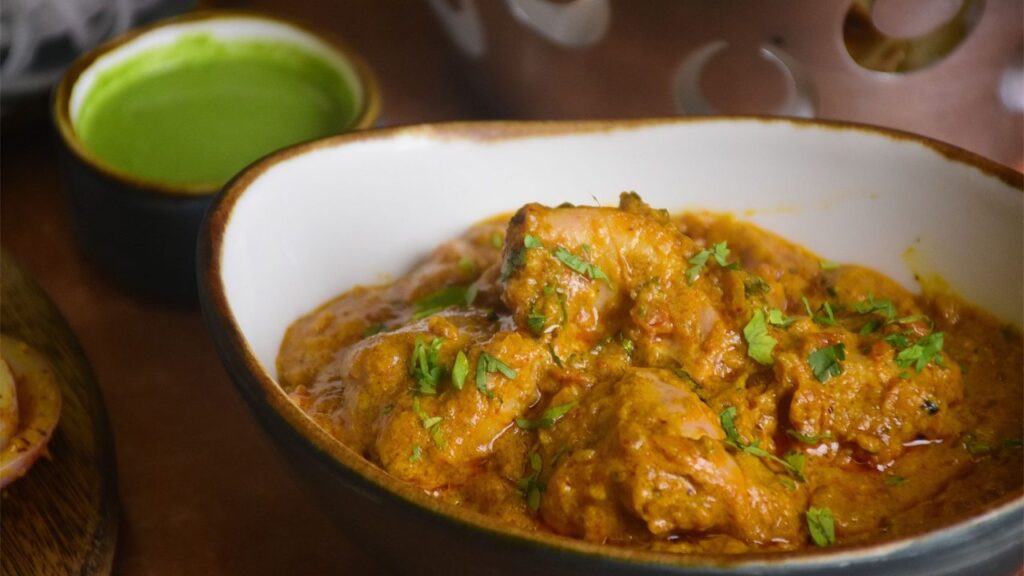
Why is my chicken tough in curry? The answer depends on the cut. Breast turns dry and stringy when it simmers too long, while thighs and drumsticks stay chewy when they come out too soon. A hard boil, tiny pieces and chicken that was already cooked cause most of the rest.
Below: seven causes, a rescue for tonight, and simmering times by cut. No fix here means serving chicken below 165°F.
Quick answer
Why is my chicken tough in curry?
Breast is usually overcooked: it dries out soon after it reaches the safe 165°F. Thighs are often undercooked for tenderness: they are safe at 165°F but soften at 175 to 195°F as collagen melts. Simmer gently, add breast late, and give thighs more time.
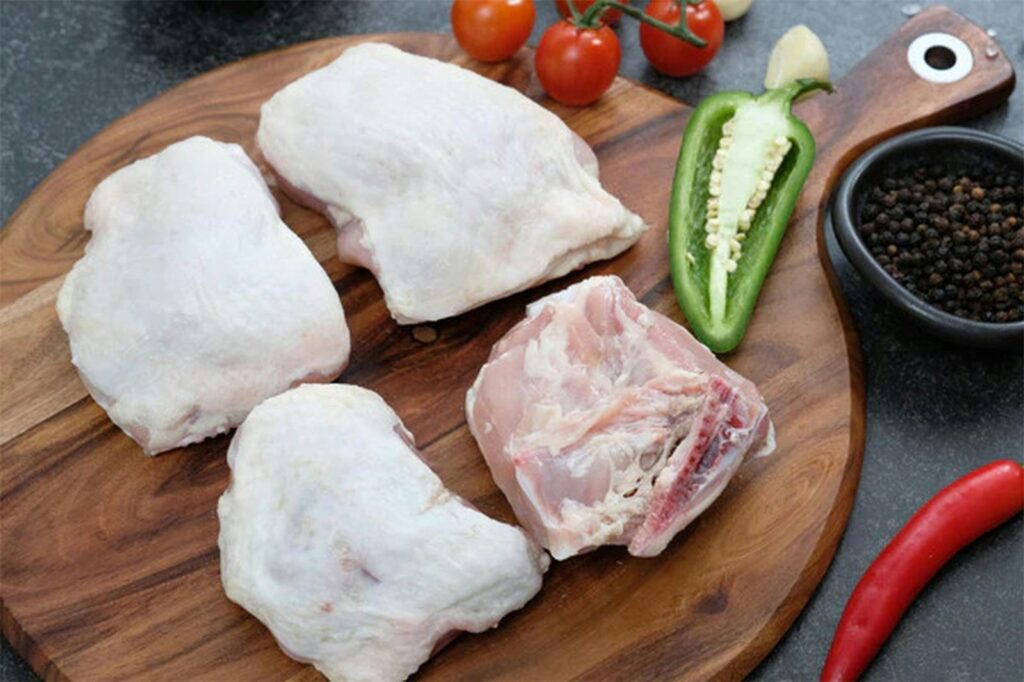
Why is my chicken tough in curry? 7 causes and fixes
| Cause | Clue | Fix |
|---|---|---|
| 1. Breast simmered too long | Dry, stringy, chalky | Add it late; stop once it reads 165°F |
| 2. Thighs pulled too soon | Chewy, clings to the bone, rubbery bits | Keep simmering gently to 175°F or more |
| 3. Hard boil | Tight, shrunken pieces | Lower to a bare simmer, lid on |
| 4. Pieces cut too small | Dry little cubes in good sauce | Cut larger, about 1 1/2 to 2 inches |
| 5. Cooked chicken cooked again | Rotisserie, tikka or leftovers gone dry | Stir in at the end; reheat only once |
| 6. Too long in an acidic marinade | Mealy or soft outside, dry inside | Shorter soak, or yogurt instead of lemon |
| 7. Stewing hen or older bird | Tough even after a long simmer | Braise or pressure cook far longer |
Should I use chicken thighs or breasts for curry?
Thighs are the safer bet for any curry that simmers. Dark meat has plenty of connective tissue, and America’s Test Kitchen (ATK) explains that it dissolves into gelatin as the meat cooks, so thighs and drumsticks get more tender with time. ATK calls thighs good at 175°F and better at 195°F.
That window has a top end. In ATK’s test of braised chicken thighs, meat that went much beyond 195°F seemed dry however much gelatin it held. Thighs in a 325°F oven spent 55 minutes between 140 and 195°F and came out tender; in a 400°F oven they raced past.
Breast is lean and has little collagen to melt, so extra time only dries it. It works in curry if it goes in near the end.

What temperature makes chicken safe?
All poultry needs to reach 165°F. The FDA’s safe food handling guide lists that figure for whole birds, parts and ground poultry, and says color and texture are unreliable signs of safety. Check the thickest piece with a thermometer, away from the bone.
Tough chicken is never a reason to stop early. If it reads below 165°F, keep cooking.

How long should chicken simmer in curry?
Bone-in thighs take roughly 45 to 50 minutes at a covered simmer, bone-in breast pieces about 20, and small curry-cut pieces as little as 10 to 15. Treat each time as a first check.
| Chicken and curry | Starting time | Pull when |
|---|---|---|
| Bone-in thighs, drumsticks, home-style curry | About 50 minutes covered | 175°F or higher |
| Bone-in breast halves, same pot | Last 20 minutes or so | 165°F |
| Small curry-cut pieces | About 10 minutes, then check | Every piece at least 165°F |
| Boneless thigh chunks | 20 to 30 minutes | Tender, 175°F or higher |
| Boneless breast chunks | 8 to 12 minutes, in the finished sauce | 165°F |
| Grilled tikka pieces, cooked to 165°F | Last few minutes | Hot through |
The bone-in times follow ATK’s one-pot chicken curry, where dark pieces get 30 minutes before the breasts join for about 20. Swasthi’s Recipes gives about 10 minutes for cut-up chicken over low to medium heat, and warns against high heat.
Grilled-chicken dishes follow their own order; butter chicken vs tikka masala explains how each is put together, and tikka vs tandoori covers the grilled part.
How do you keep chicken tender in curry?
Cook the sauce first, then the chicken. Reduce the masala to the thickness you want, add the chicken, cover, and hold a lazy simmer with only a few bubbles.
- Thin sauce: lift out breast pieces that have reached 165°F, keep them hot, and reduce the sauce alone. Our guide on how to thicken a watery curry has faster routes.
- Mixed cuts: start the dark meat, then add breast for the last 20 minutes.
- Heavy pot: it holds a steadier simmer; kadai vs Dutch oven compares two.
- Yogurt sauce: gentle heat also prevents splitting, as yogurt that curdled in curry explains.
Marinades, precooked chicken and older birds
Acid helps, then hurts. Chowhound notes that yogurt’s lactic acid causes trouble more slowly than citrus, and that advice on a limit runs from 12 hours to the USDA’s 24. The Takeout suggests only 30 to 60 minutes for acidic marinades. As a rule of thumb, give yogurt a few hours to overnight, and lemon or vinegar under an hour, always in the fridge.
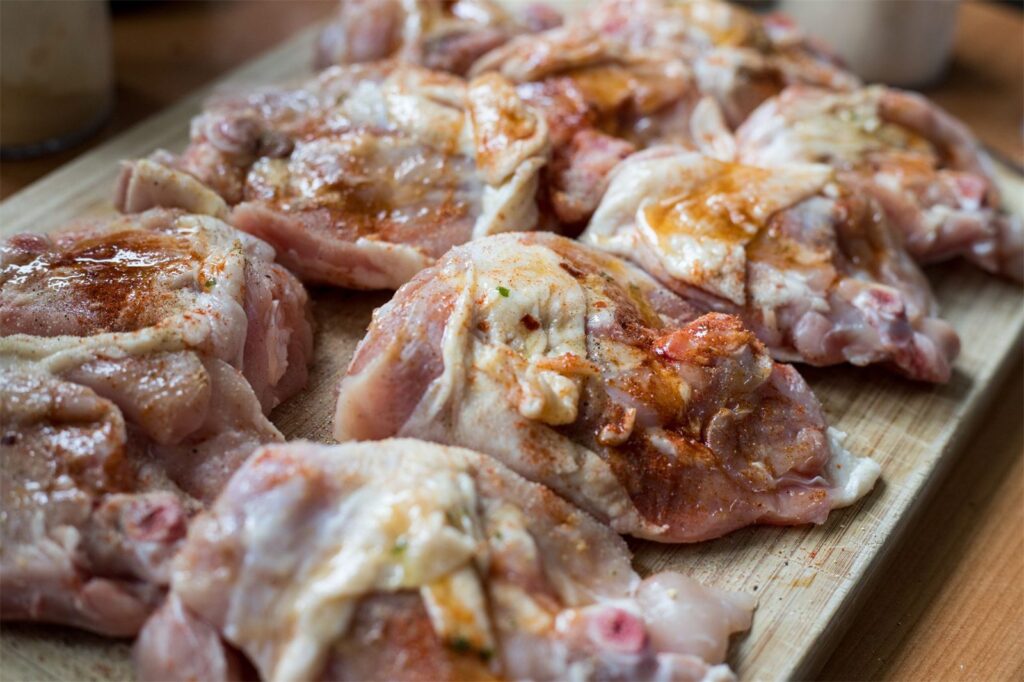
Rotisserie chicken and leftovers are already done, so a second long simmer only dries them. Save them for quick dishes such as stir-fried jalfrezi.
Check the label on a whole bird, too. USDA class standards define a stewing hen as an adult female more than 10 months old, with meat less tender than a roaster’s. It needs a long braise.
How to rescue tough chicken tonight
- Check the temperature. Under 165°F, cover and keep simmering.
- Thighs or drumsticks: add a splash of hot water, cover, and simmer 10 to 15 minutes more. They often soften.
- Breast: more heat will not help. Slice it thin across the grain or shred it, so each bite carries sauce.
- Loosen the sauce with hot water, coconut milk or cream.
- Rest it in the hot sauce, lid on and heat off, for about 10 minutes, then serve.
If the sauce is off too, the complete guide to fixing curry sorts taste problems from texture problems.

Leftover chicken curry
Refrigerate it within 2 hours. To reheat, bring the sauce to a boil, as the FDA advises for sauces and gravies, and check that the chicken reaches 165°F. Warm only what you will eat, since each round dries the meat. Storage times are in can you freeze curry, and for chicken in rice see how to reheat biryani.
Frequently Asked Questions
Why is my chicken tough in curry?
Breast has usually simmered too long, and thighs often not long enough. A hard boil, very small pieces or precooked chicken are the next suspects.
How do you keep chicken tender in curry?
Finish the sauce first, then simmer the chicken gently with the lid on. Add breast near the end, and give thighs time to pass 175°F.
Should I use chicken thighs or breasts for curry?
Thighs, if the curry simmers for more than 15 minutes or so. Breast suits quick curries and goes in last.
Can you overcook chicken in curry?
Yes. Breast dries out soon after 165°F, even in plenty of sauce. Thighs are forgiving, but ATK found them dry once they went much past 195°F.
Should you brown chicken before adding it to curry?
It suits skin-on, bone-in pieces and adds flavor to the pan; ATK browns them 7 to 10 minutes. Skip it for small or thin breast pieces, which overcook, and get depth from well browned onions instead.
How long should chicken simmer in curry?
About 50 minutes for bone-in thighs, 20 for bone-in breast halves and 8 to 12 for boneless breast chunks, always to at least 165°F.
Next: the same problem in cheese form, why paneer turns rubbery in curry.