Fresh vs canned tomatoes for curry has no single winner, and Indian cooks disagree about it in print. A useful rule: choose fresh for bright, light dishes such as dal and everyday vegetable curries, and canned whole or pureed tomatoes for smooth restaurant-style gravies, or whenever the fresh ones are pale and hard.
The product in the can matters as much as the choice. Below: the best tomato by dish, swap amounts, and the label words that change how a sauce cooks.
Quick answer
Are fresh or canned tomatoes better for curry?
Ripe fresh tomatoes taste brighter and suit dal, chana masala and light curries. Canned whole tomatoes or puree give a smoother, more consistent gravy for butter chicken and off-season cooking. Swap about 1 pound of fresh for a 14.5-ounce can. Avoid diced tomatoes when you want the sauce to break down.
Fresh vs canned tomatoes for curry, by dish
| Dish | Best choice | Works too | Why |
|---|---|---|---|
| Butter chicken | Canned whole, blended | Puree or passata; very ripe fresh, peeled | Needs a smooth, even sauce |
| Tikka masala | Puree or crushed | Canned whole | Thick and clingy |
| Chana masala | Ripe fresh | Canned whole | Fresh tang suits chickpeas |
| Dal and tadka | Fresh, chopped | 1 tbsp puree | Small amount, light taste |
| Rogan josh | None, or very little | 1 tbsp paste | Kashmiri versions skip tomato |
| Potato curry | Fresh | Canned, with parboiled potatoes | Acid slows potatoes |
| Quick weeknight curry | Crushed or puree | Paste and water | Less cooking down |
For how two of these sauces differ, see butter chicken vs tikka masala. Why potatoes object to tomato is covered in potatoes not cooking in curry.
What do Indian cooks say about fresh and canned?
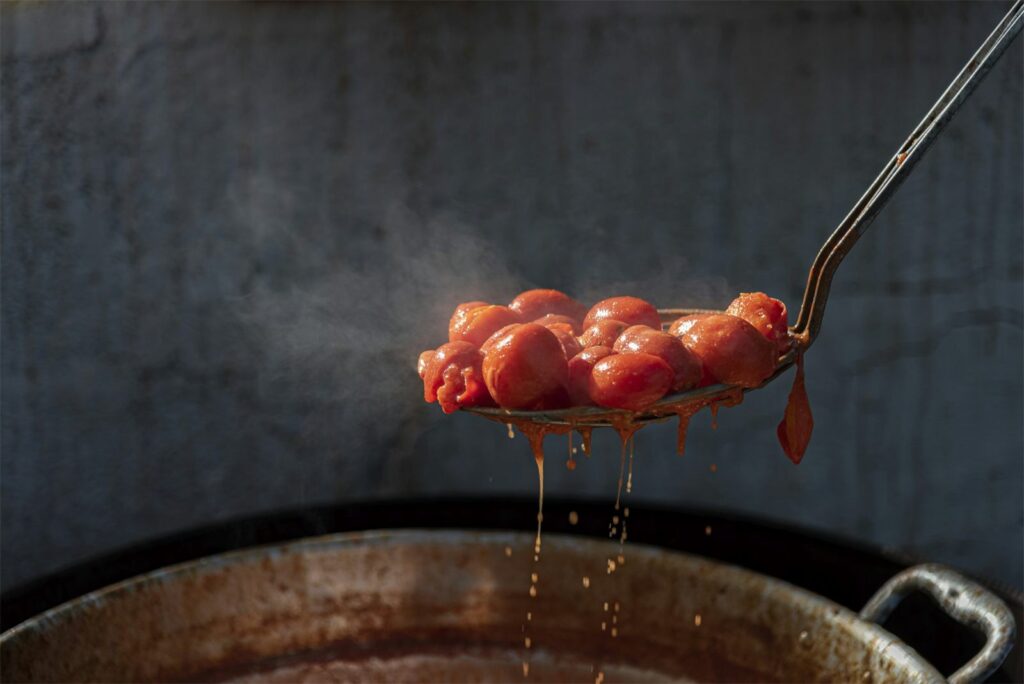
- Fresh, nearly always: Smitten Kitchen reports that Priya Krishna’s Indian-ish tells cooks to use canned only “if you have to,” because even winter tomatoes bring a brightness that canned ones lack.
- Fresh for some, canned for others: Swasthi’s Recipes calls fresh tomatoes best for chana masala, with canned whole as backup, and lists passata, paste or canned whole for butter chicken.
- Canned for butter chicken: Tea for Turmeric says fresh makes that sauce tarter and less smooth unless the tomatoes are ripe, boiled, peeled and pureed.
- Canned for the masala base: Hari Ghotra uses whole canned plum tomatoes, keeps blended fresh ones for vegetables and dal, and skips passata as too concentrated.
The pattern: canned where the tomato is the sauce, fresh where it is a seasoning.
Are diced tomatoes good for curry?
Only if you want visible pieces. Diced tomatoes usually contain calcium chloride, a firming agent, so they hold their shape through long cooking. In its tasting of canned diced tomatoes, America’s Test Kitchen found that the American brands added salt, citric acid for tartness and calcium chloride for firmness, while the Italian “chopped” ones had none of the three.
Harold McGee’s advice, quoted in an American University chemistry blog, is to check labels and avoid calcium if you want a fine-textured dish. Blending diced tomatoes first helps, but whole peeled tomatoes are the better buy.
| Product | How it cooks | Use it for |
|---|---|---|
| Whole peeled | Crush or blend; breaks down well | Most curries |
| Crushed | Between chunky and smooth; varies by brand | Weeknight gravies |
| Diced | Stays in pieces | Chunky vegetable curries |
| Puree or passata | Smooth, thick, little cooking down | Butter chicken, tikka masala |
| Paste | Very concentrated; fry it first | Color, body, emergencies |
| Tomato sauce | Often seasoned | Only if plain |
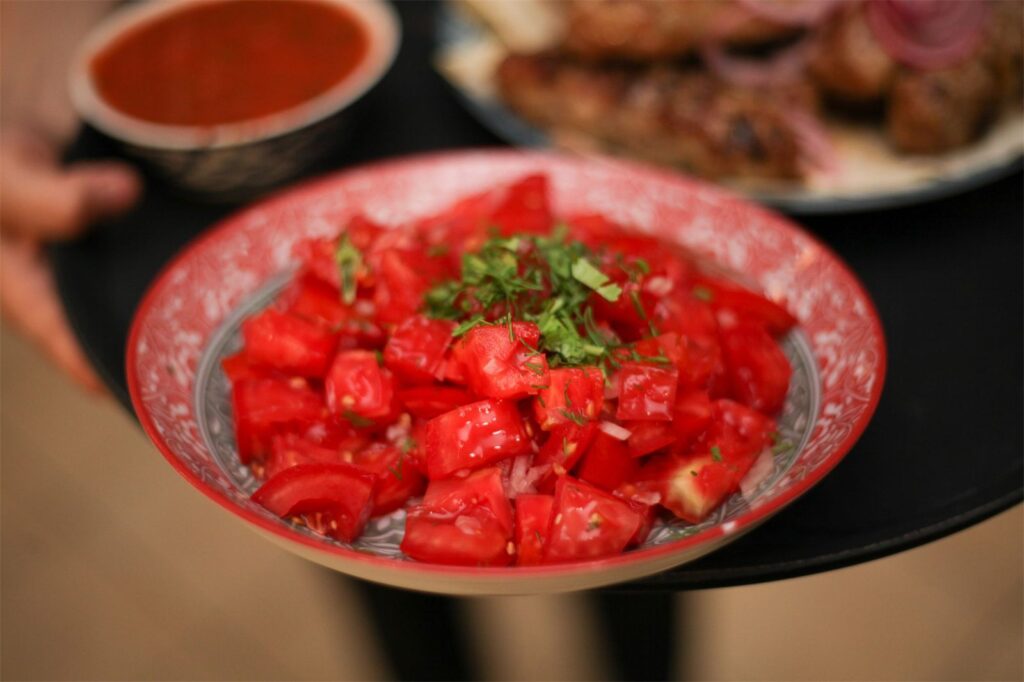
How many fresh tomatoes equal a can?
About 1 pound of fresh tomatoes replaces one 14.5-ounce can, and 2 pounds replace a 28-ounce can, according to the Reluctant Gourmet’s tomato conversion chart. Counts are less reliable: that chart says 3 to 4 medium tomatoes or 7 to 8 Romas per pound, while NDSU Extension counts five to six whole tomatoes for the same can. Weigh them if you can.
| Recipe calls for | Use instead | Source |
|---|---|---|
| 1 pound fresh | One 14.5-ounce can | Reluctant Gourmet |
| One 28-ounce can | About 2 pounds fresh | Reluctant Gourmet |
| 1 cup puree | 1/2 cup paste plus 1/2 cup water | Reluctant Gourmet |
| 1.3 pounds fresh (butter chicken) | 1 cup passata, or 1/3 cup double concentrate paste | Swasthi’s Recipes |
| 2 medium fresh | 1/3 to 1/2 cup puree | Rule of thumb |
Fresh tomatoes carry more water, so allow extra simmering, or use one of the methods in how to thicken a watery curry.
Can I use tomato paste instead of tomatoes in curry?
Yes, for color and depth. Thin it with an equal amount of water to stand in for puree, or fry a tablespoon or two in the oil for a minute or two before adding liquid. It tastes cooked rather than fresh, so a curry made only with paste can seem flat. One chopped tomato alongside fixes that.

Cooking the tomatoes down
Whichever you pick, the step that decides the flavor is cooking it out. Add tomatoes after the onions have colored (see how to brown onions for curry), and stir over medium heat until the masala darkens, pulls together and oil shows at the edges. Add water only after that. In a pressure cooker, thick tomato can scorch, which is a common cause of the Instant Pot burn notice with Indian curries.

Do canned tomatoes make curry sour?
They can. Added citric acid is common in American cans, and Swasthi prefers canned tomatoes without it, using onion to soften the tang in butter chicken. Sour fresh tomatoes do the same. If yours is already sharp, our guide to fixing a curry that is too sour has the steps.
Do not add more tomato just to get a redder sauce. Color in restaurant curries often comes from mild red chili; Kashmiri chili powder vs paprika explains which to use.
Peeling, freezing and reading the label
- Peeling: blend instead and you can skip it for most curries; Hari Ghotra blends skin and seeds. For a silky sauce, NDSU Extension’s method is to dip tomatoes in boiling water for 30 to 60 seconds and slip off the skins.
- Freezing: NDSU says tomatoes can be frozen whole, chopped or pureed, without blanching or peeling. Use them only in cooked dishes.
- “No salt added”: salt the curry as usual. With regular cans, salt late.
- “With basil” or “Italian style”: leave these for pasta.

Frequently Asked Questions
Are fresh or canned tomatoes better for curry?
Ripe fresh for dal, chana masala and light curries; canned whole or puree for smooth gravies and off-season cooking.
How many fresh tomatoes equal a can?
About 1 pound for a 14.5-ounce can and 2 pounds for a 28-ounce can.
Can I use tomato paste instead of tomatoes in curry?
Yes. Mix equal parts paste and water in place of puree, and fry the paste briefly so it does not taste raw.
Are diced tomatoes good for curry?
Not for a smooth sauce. Most contain calcium chloride, which keeps the pieces firm. Use whole peeled, crushed or puree.
Should you peel tomatoes for curry?
Not if you blend them. Peel for a silky sauce such as butter chicken.
Do canned tomatoes make curry sour?
Sometimes, especially with added citric acid. Cook them longer and balance with onion, cream or a pinch of sugar.
Next: more sauce repairs in the guide to fixing common curry problems.