Knowing how to remove oil from curry is useful because many Indian curries start with a generous amount of oil or ghee, and some of it rises to the top as the sauce cooks. A thin shine is normal and often means the curry is done. A thick, greasy layer is easy to fix: the oil sits on top, so you can lift it off without changing the flavor much.
Quick answer
How do you remove excess oil from curry?
Let the curry rest off the heat for 5 minutes so the oil collects on top, tilt the pot, and skim it off with a wide spoon or ladle. For the cleanest result, chill the curry overnight and lift off the fat once it firms up. Skim at the end of cooking, not the start.

Why does oil float on top of curry?
Oil floats because it is lighter than the water-based sauce and does not mix with it. As a curry simmers, water evaporates and the onion, tomato and spice base thickens. Once the base has cooked down, it can no longer hold the fat in suspension, so the oil separates and rises to the surface. A curry with more oil or ghee, or one that has cooked a long time, shows a thicker layer.
Cream and coconut milk add fat too. When those sauces boil hard, their fat can separate out and join the oil on top.
Is oil separating in curry a good sign?
Usually, yes. Many Indian recipes use “cook until the oil separates” as the doneness cue for the masala base: once the onions, tomatoes and spices have cooked down, oil appears at the edges of the pan and on the surface. That tells you the raw taste of the tomato and spices has cooked out. So a little separated oil is a sign of a well-cooked base, not a mistake.
It only becomes a problem when there is more oil than you want to eat. That is why you skim at the end, not the start: the oil helps the spices bloom and the base cook evenly, and if you remove it early, the masala can stick, scorch or taste raw. If your curry tastes flat after skimming, our guide on why a curry tastes bland explains how to bring the flavor back.

How to remove oil from curry: skimming and 5 other methods
Take the pot off the heat and let it sit for about 5 minutes so the bubbling stops and the oil gathers in one layer. Tilt the pot slightly so the oil pools on one side. Then slide a wide, shallow spoon or ladle just under the surface and lift the oil into a bowl. Repeat until only a thin shine remains. Work slowly so you take oil, not sauce.
Here are six methods, from fastest to most thorough. The “how much removed” column is a general guide, since results depend on the curry and the oil.
| Method | Time | How much oil it removes | Mess | Best for |
|---|---|---|---|---|
| Tilt and skim with a ladle | 5 to 10 minutes | Most of a visible layer | Low | Any curry, right before serving |
| Ice cubes in a ladle | 5 minutes | Some; oil clings to the cold metal | Medium wipe the ladle often | Ghee or butter curries |
| Paper towel blot | 2 to 3 minutes | The last thin film | Medium torn towel risk | Finishing touch after skimming |
| Bread slice on the surface | 1 to 2 minutes | A small amount | Medium soggy crumbs | Small pots, light shine |
| Fat separator (gravy jug) | 10 minutes | Most of the oil in thin curries | Medium extra dish to wash | Thin, soupy curries and dal |
| Chill overnight, lift the fat | 6 hours or overnight | The most, if the fat firms up | Low | Make-ahead curries, ghee or butter |
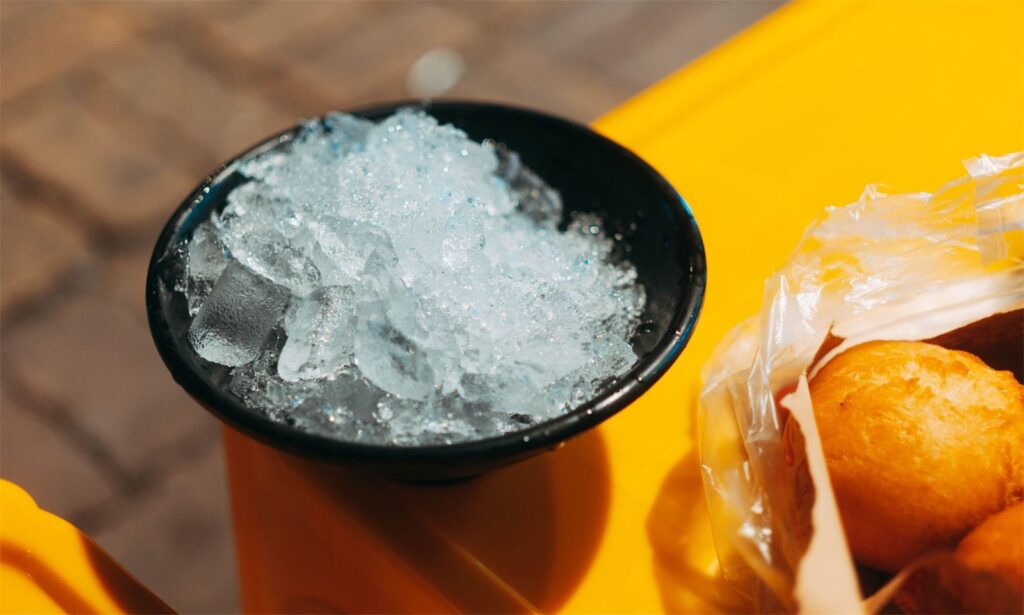
Ice cubes in a ladle
Put a few ice cubes in a metal ladle and drag the bottom of the ladle lightly across the surface. Fat is more likely to thicken and cling to the cold metal, so wipe the ladle with a paper towel after each pass. Keep the ladle upright so melting water does not drip into the curry.
Chill and lift
This is the most thorough method. Cool the curry, cover it and refrigerate it. Whether the fat sets firm depends on what you cooked with.
The American Heart Association’s guide to dietary fats explains that saturated fats, like butter, are typically solid at room temperature, while unsaturated oils are liquid at room temperature and only start to turn solid when chilled.
In practice, ghee and butter set into a firm layer you can lift off, while canola or vegetable oil may only thicken and cloud, so you skim it with a cold spoon instead. For safe cooling and storage, see how long curry keeps in the fridge and freezer.

Does bread soak up oil?
A little. Laying a slice of plain bread on the surface for a minute will absorb some oil, but bread also soaks up sauce and can leave soggy crumbs behind. It works best on a small pot with a light shine of oil. For a thick layer, skimming with a ladle is faster and wastes less curry. A folded paper towel, touched to the surface and lifted straight off, does the same job with fewer crumbs.

How much oil should a curry have?
There is no single right amount, because it depends on the dish. Slow-cooked “bhuna” style curries are meant to show some oil, while lentil and vegetable curries often need much less. As a rule of thumb, you need enough oil to cover the bottom of the pan and fry the onions and spices without sticking, and you can reduce from there next time. A heavy-based pan, such as one of the options in our guide to kadai pans for US stoves, helps the masala cook evenly with less oil.
If you remove a lot of oil, the curry may also lose some of its heat, since much of the chili flavor dissolves in fat. Our guide on how to make a curry less spicy explains why. A good tadka of spices bloomed in hot oil at the end adds back aroma with only a spoonful of fat.
Other curry problems after skimming
Removing oil also removes a little of the salt and spice that dissolved in it, and the sauce can look thinner. If it turned watery, see how to thicken a watery curry. If it now tastes too salty by comparison, read how to fix a curry that is too salty. Our complete guide to fixing curry covers every other common problem.
Frequently Asked Questions
Why does oil float on top of curry?
Oil is lighter than the water-based sauce and does not mix with it. As the sauce cooks down, it can no longer hold the fat, so the oil separates and rises to the top.
Is oil separating in curry a good sign?
Usually. Many Indian recipes use oil separating from the masala as the sign that the base is fully cooked. It only needs fixing if there is more oil than you want to eat.
How do you skim oil off curry?
Let the curry rest off the heat for about 5 minutes, tilt the pot so the oil pools on one side, and lift it off with a wide spoon or ladle. Blot the last film with a paper towel.
Does bread soak up oil from curry?
A little. A slice of bread laid on the surface absorbs some oil, but it also soaks up sauce and leaves crumbs. Skimming is faster for a thick layer.
How much oil should a curry have?
Enough to fry the onions and spices without sticking. Slow-cooked curries often show some oil when done, while dal and vegetable curries usually need less. Adjust to taste next time.