Paratha vs roti is a common question because the two Indian flatbreads start from the same dough: whole wheat atta, water and a little salt. What changes is fat and folding. Roti is rolled thin, cooked on a dry griddle and puffs with steam. Paratha is brushed with ghee or oil, folded into layers and pan-fried, so it comes out richer, flakier and often stuffed.
Below are the six differences that matter, a side-by-side table, USDA nutrition figures and a guide to when each bread fits a meal. If you are comparing roti with the restaurant bread instead, see our guide to naan vs roti.
Quick answer
What is the difference between paratha and roti?
Both are unleavened whole wheat flatbreads. Roti is a single thin layer cooked on a dry tawa until it puffs, so it is soft and light. Paratha is rolled with ghee or oil, folded into layers and shallow-fried, so it is thicker, flaky and richer. Parathas can also be stuffed with potato, cauliflower or paneer.

Paratha vs roti: side by side
| Feature | Roti (chapati) | Paratha |
|---|---|---|
| Flour | Atta (whole wheat) | Atta, sometimes mixed with maida (white flour) |
| Fat | None or a little, often ghee brushed on after cooking | Ghee or oil between the layers and in the pan |
| Layers | One | Several, from folding or coiling |
| Cooking | Dry tawa, then puffed over a flame or pressed on the pan | Shallow-fried on a tawa until browned |
| Texture | Thin, soft, pliable | Thicker, flaky, crisp outside, chewy inside |
| Stuffed? | No | Often (aloo, gobi, paneer, methi) |
| When eaten | Every day, with dal, sabzi and curry | Breakfast, weekends, with yogurt and pickle, or with curry |
| Keeping | Best fresh; dries out within hours | Holds a little better thanks to the fat; reheats well on a pan |
Paratha vs roti: 6 differences explained
1. Fat in the dough and on the bread
Roti dough is basically atta and water. Wikipedia’s chapati article lists oil as optional and small (about 5 ml per 100 g of flour). Paratha needs fat to work: ghee or oil is brushed onto the rolled dough before folding and used again in the pan. Our comparison of ghee vs butter explains why ghee is the classic choice.
2. Layers
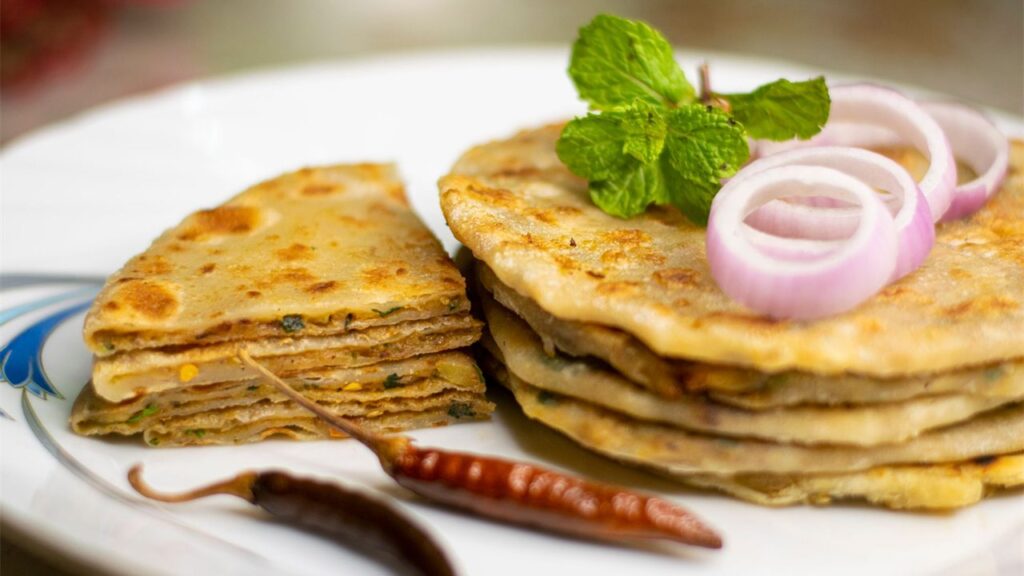
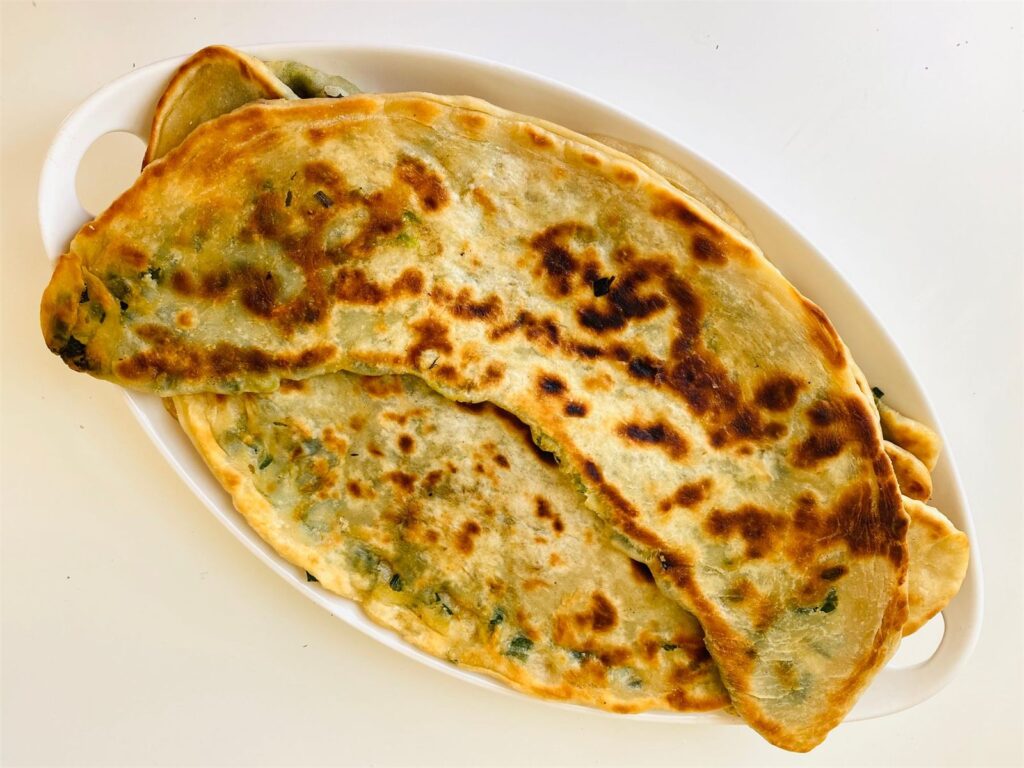
Wikipedia traces the word paratha to a Hindi word for “layer.” The dough is rolled out with ghee or oil, folded, and rolled again, often two or more times, usually into a triangle with four to six layers. Lachha paratha takes this further: King Arthur’s lachha paratha rolls the dough thin, brushes it with ghee and coils it into a snail shape before rolling it out again, giving many round layers. Roti has a single layer.

3. Cooking method
Roti is cooked on a hot, dry tawa and then puffed, either over an open flame or by pressing it on the pan with a cloth; the steam inside balloons it. If yours stay flat, our guide to why roti won’t puff up covers the causes. Paratha is shallow-fried on the tawa with ghee or oil until golden and crisp in spots. It may puff in places, but it is not put over an open flame.
4. Texture
Roti is thin, soft and light, good for tearing and scooping. Paratha is thicker and richer: crisp and flaky on the outside, soft and a little chewy inside. Wikipedia notes that, without any leavening, steam is what separates the crust from the crumb in a paratha, and the fat between the layers keeps them from fusing.
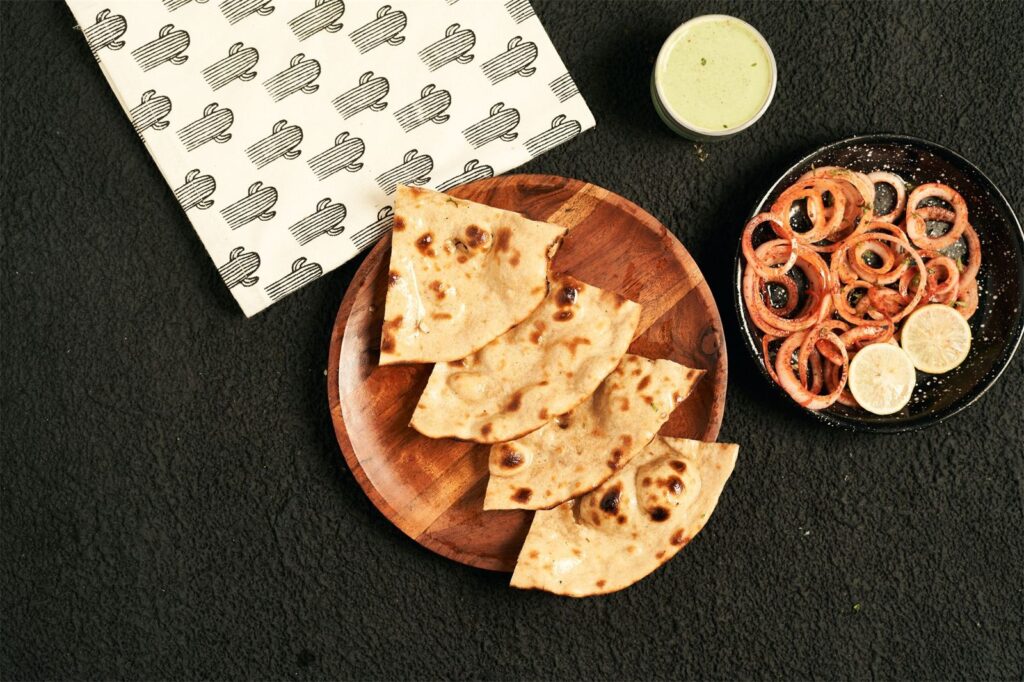
5. Fillings
Roti is never stuffed. Parathas often are: the dough is shaped into a ball, filled, sealed and rolled out. Wikipedia lists common fillings such as spiced potato (aloo), cauliflower (gobi), radish (mooli), fenugreek leaves (methi), minced meat (keema) and paneer. Plain parathas are often flavored with ajwain or kasuri methi in the dough; see what kasuri methi is and the best substitute for ajwain if you are out.
6. Nutrition
Paratha has more fat and calories, mainly from the ghee or oil. USDA FoodData Central’s survey database lists paratha at 326 calories and 13.2 g fat per 100 g, against 299 calories and 9.2 g fat for chapati or roti. Carbohydrate (about 45 to 46 g) and fiber (about 9.6 to 9.7 g) are almost the same, since both are whole wheat. These are standard database entries; your own bread depends on how much fat you use.
| Per 100 g | Chapati or roti | Paratha |
|---|---|---|
| Calories | 299 | 326 |
| Fat | 9.2 g | 13.2 g |
| Carbohydrate | 46.1 g | 45.4 g |
| Fiber | 9.7 g | 9.6 g |
| Protein | 7.9 g | 6.4 g |
Is paratha healthier than roti?
No. Roti is usually the lighter everyday choice, because it is cooked with little or no fat. Paratha carries extra fat and calories from the ghee or oil, as the USDA figures above show, while fiber and carbohydrate stay about the same. A paratha cooked with a light hand can still be part of a balanced meal, especially next to dal, yogurt and vegetables. If you follow a specific diet, check with a doctor or dietitian.
Is chapati the same as paratha?
No. Chapati is another name for roti: Wikipedia describes it as a form of roti, and the two words are used for the same thin, single-layer bread in most US Indian kitchens. Paratha is a different bread made from the same flour. One exception: East African chapati is fried and layered, so Wikipedia notes it is closer to an Indian paratha.
Is paratha made with the same dough as roti?
Mostly, yes. Both start with atta, water and salt, and many home cooks make one batch of dough for both. Some cooks add a spoon of oil or ghee to paratha dough, or mix in some white flour for a more tender bite, which Wikipedia also notes. For flour choice in the US, see atta vs whole wheat flour for roti.
Pans, frozen parathas and what to eat them with
Both breads cook on a tawa, a flat or slightly curved griddle. A heavy cast iron or carbon steel tawa holds the steady heat that parathas need; our guide to the best tawa for roti on US stoves compares options, and cast iron vs nonstick tawa covers the material choice. A cast iron skillet works in a pinch.
Indian grocery stores in the US sell frozen parathas, plain, lachha and stuffed, which cook straight from frozen on a hot pan. Wikipedia notes that frozen and ready-to-cook parathas are a common convenience food in India too.
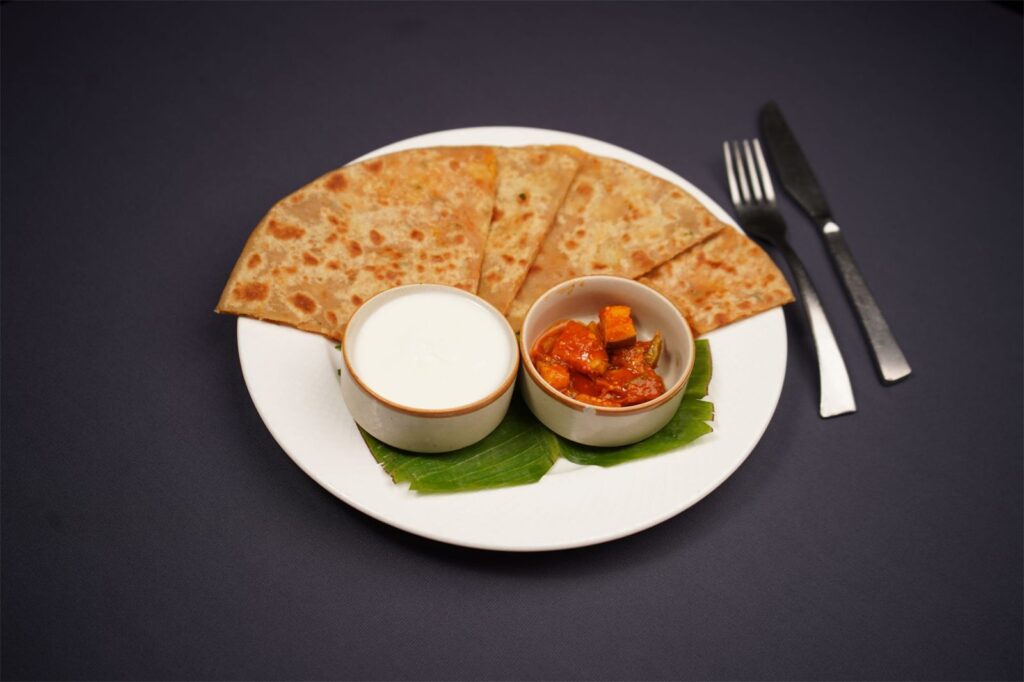
Roti is the everyday bread for dal, sabzi and curry. Paratha is often the center of the meal: Wikipedia lists yogurt (dahi) and pickle as classic partners, along with curries, and parathas with tea are a common breakfast. A rich paratha suits a simple side, such as a bowl of dal tadka.
Frequently Asked Questions
What is the difference between paratha and roti?
Roti is a thin, single-layer whole wheat bread cooked on a dry griddle until it puffs. Paratha uses the same flour but is layered with ghee or oil and pan-fried, so it is thicker, flakier and richer, and it is often stuffed.
Is paratha healthier than roti?
Roti is usually the lighter choice. USDA FoodData Central lists paratha at 326 calories and 13.2 g fat per 100 g, against 299 calories and 9.2 g fat for roti, with similar fiber.
Is chapati the same as paratha?
No. Chapati is another name for roti, a single-layer bread cooked without fat. Paratha is a layered, pan-fried bread made from the same atta.
Is paratha made with the same dough as roti?
Usually, yes: atta, water and salt. Some cooks add a little oil, ghee or white flour to paratha dough for a softer, flakier bite.
Why is paratha flaky?
Ghee or oil brushed between folded layers keeps them apart, and steam from the dough separates them as the bread fries. Coiled lachha paratha has the most layers.
What do you eat paratha with?
Classic partners are plain yogurt and Indian pickle, often at breakfast with tea. Parathas also go with dal, dry vegetable dishes and curries.