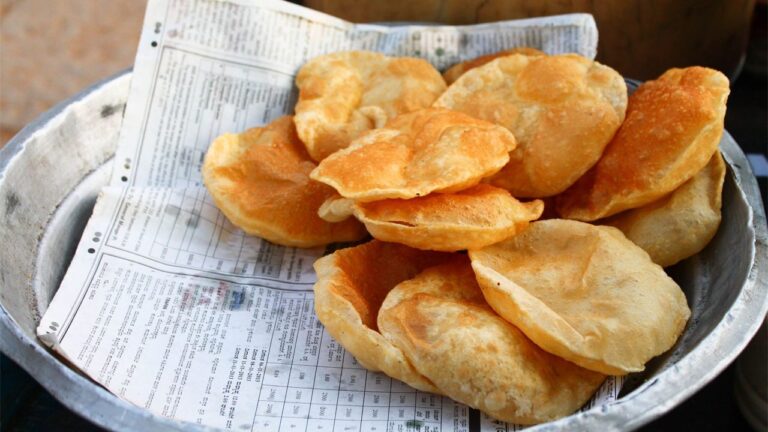
Roti not puffing up is one of the most common frustrations with Indian flatbread. You roll a circle, cook it on the pan, and it stays flat and stiff instead of ballooning into a soft, hollow round. The causes are few, and most come down to the dough, the rolling or the heat.
This guide lists each cause, the clue that points to it and the fix, drawn from America’s Test Kitchen, King Arthur Baking and established Indian cooking sites. It is not a recipe; use your own and adjust it with these fixes.
Quick answer
Why is my roti not puffing up?
Roti puffs when water in the dough turns to steam and gets trapped between two cooked layers. It stays flat when the dough is too dry, the roti is rolled unevenly or has a hole, or the pan is not hot enough. Use a soft, well-rested dough, roll it evenly from edge to edge, cook on a pan heated over medium-high, and press the edge after the second flip.
What makes a roti puff up?
Steam. In America’s Test Kitchen’s guide to tender, puffy roti, Andrea Geary explains that water in the dough turns to steam on the hot pan and cooks the bread from the inside.
That also explains why flat rotis turn out hard. A roti that does not puff has to stay on the pan longer to cook through, which dries out the outside and makes it dense.
Roti not puffing up: 9 causes and fixes
| Cause | Clue | Fix |
|---|---|---|
| Dough too dry or stiff | Dough cracks at the edges when rolled | Add water a spoonful at a time until soft and slightly tacky |
| Dough not rested | Springs back when rolled | Rest it covered for at least 30 minutes |
| Over-kneaded or under-kneaded | Tough, or lumpy and torn | Knead only until smooth |
| Uneven rolling | Only part of the roti bubbles | Roll to an even thickness from edge to edge |
| Too much dusting flour | Dry, floury surface, burnt specks | Brush off extra flour before cooking |
| A hole or tear | Steam hisses out of one spot | Reroll torn pieces; avoid sharp tools |
| Pan not hot enough | Pale, hard, crisp roti | Heat the pan over medium-high until thoroughly hot |
| Pan too hot | Dark spots before bubbles form | Lower the heat a notch between rotis |
| Wrong flip timing | Roti stiff on one side | Flip when bubbles appear, flip again, then press the edge |

Should roti dough be soft or stiff?
Soft. A dry, stiff dough is the most common reason roti stays flat, and Indian Healthy Recipes warns that kneading a dry dough makes hard flatbreads. King Arthur Baking’s roti recipe asks for a dough that is “soft and slightly tacky.” ATK cites the cookbook author Krish Ashok, who recommends water at 80 percent of the flour’s weight as a starting point.
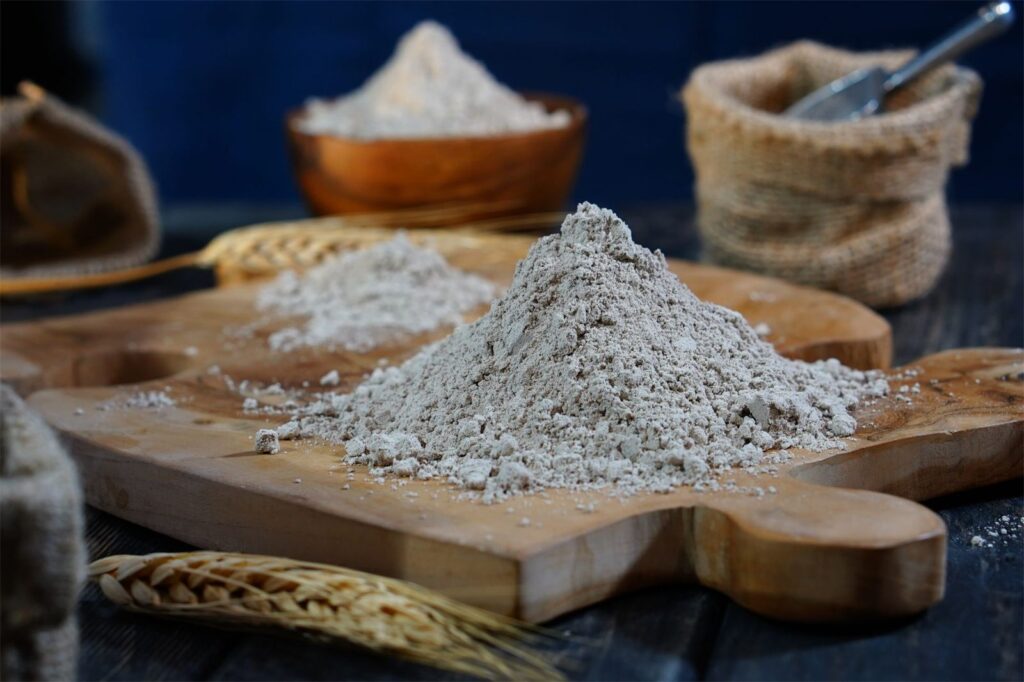
If your dough feels firm, work in warm water a little at a time with damp hands rather than pouring it in. Flour matters too. ATK recommends finely milled chakki atta from an Indian grocery (see how atta differs from US whole wheat flour) and suggests whole wheat pastry flour as a substitute; King Arthur says white whole wheat flour works.
How long should roti dough rest?
At least 30 minutes. Rested dough rolls out evenly without springing back. ATK rests the flour, water and oil for about 30 minutes before adding salt and kneading for about 2 minutes; King Arthur rests its kneaded dough for 30 minutes to an hour.
Kneading needs balance. Indian Healthy Recipes says over-kneading can make roti hard, while dough that is barely mixed tears when you roll it. Knead until smooth and keep the dough covered while it rests.
Rolling: the cause most cooks miss
Even thickness matters more than a perfect circle. ATK’s advice is to roll each piece into a 6-inch round with “an even thickness from edge to edge.”
- Turn as you roll. Rotate the dough every few strokes and use light pressure.
- Use as little flour as possible. Indian Healthy Recipes says too much flour can make roti hard. Shake or brush off extra before it hits the pan, as King Arthur advises.
- Protect the surface. A tear or a poke from a sharp spatula lets steam escape. Reroll a torn piece instead of cooking it.

What heat should the tawa be?
Medium-high, and fully preheated. ATK and King Arthur both cook roti on a pan heated over medium-high, and ATK says to wait until it is thoroughly hot. Indian Healthy Recipes says low or even moderately low heat makes roti hard and crusty, while very high heat burns it before it can puff.
A heavy cast iron or carbon steel pan holds heat between rotis, which is why ATK and King Arthur use one when you have no tawa. Our guides to the best tawa for roti on US stoves and cast iron vs nonstick tawa compare the options.
When should you flip roti?
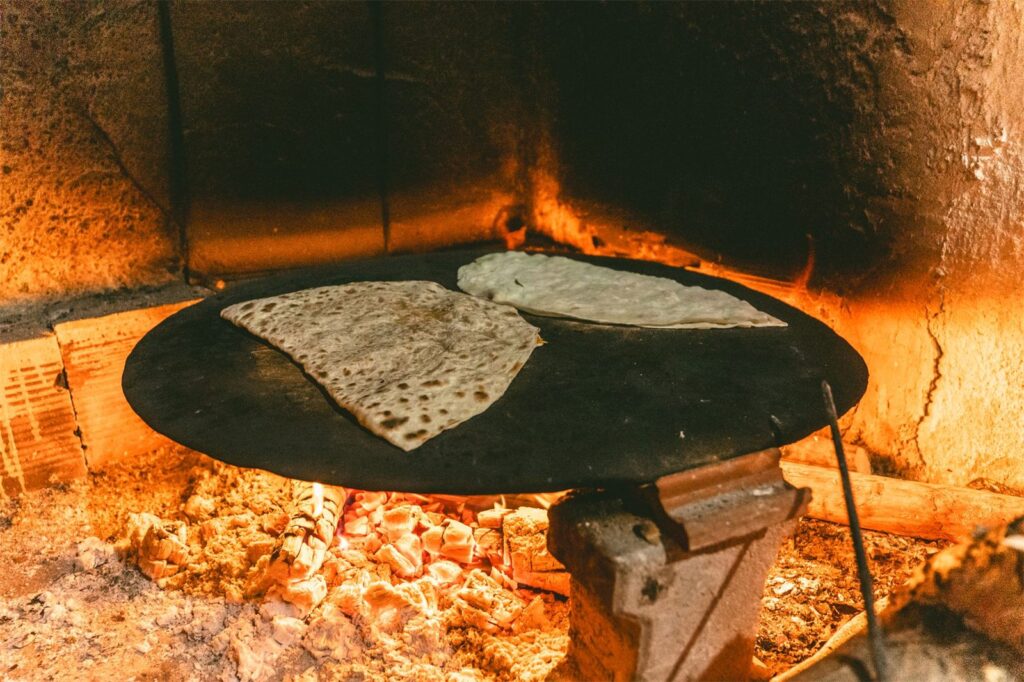
Early, and twice. ATK cooks the first side for about 20 seconds, until it looks spotty blond with a few brown flecks, then turns it to brown the second side, then flips it again. The puffing starts after that second flip. King Arthur flips once small bubbles form on top.
Cooking the first side too long is a common mistake: the roti dries before the steam builds. If it starts to puff in patches, ATK presses the edge gently with a wadded kitchen towel to push the steam across, so the bubbles join into one. Indian Healthy Recipes uses a flat wooden spatula the same way.
How do you make roti puff without a gas flame?
Use the towel press or the microwave. On gas, King Arthur holds the roti with tongs over a low flame for 3 to 5 seconds until it puffs. Electric and induction stoves need another way.
- Press the edge. After the second flip, press around the edge with a folded towel. This is ATK’s skillet-only method.
- Microwave rescue. If a toasted roti still refuses, ATK suggests a method from Madhur Jaffrey: microwave it on a plate for about 30 seconds.
- Skip the flame step. Never hold bread directly on or over an electric coil or induction surface; the flame finish is for gas burners only.
Puffing is a bonus: Indian Healthy Recipes says a roti that does not puff is still fine to eat.
Why is my roti hard after cooking?
Usually for the same reasons it did not puff: dry dough, too much flour, a cool pan or too long on the heat. Fix the cause, then keep cooked rotis soft:
- Stack them as they come off the pan and cover them loosely with a cloth, partly open so they do not sweat, as Indian Healthy Recipes suggests.
- Brush with ghee if you like; King Arthur uses it for flavor and softness.
- Store leftovers airtight in the fridge for up to two days and reheat between damp paper towels in the microwave for about 10 seconds, per King Arthur.
Roti, chapati or naan?
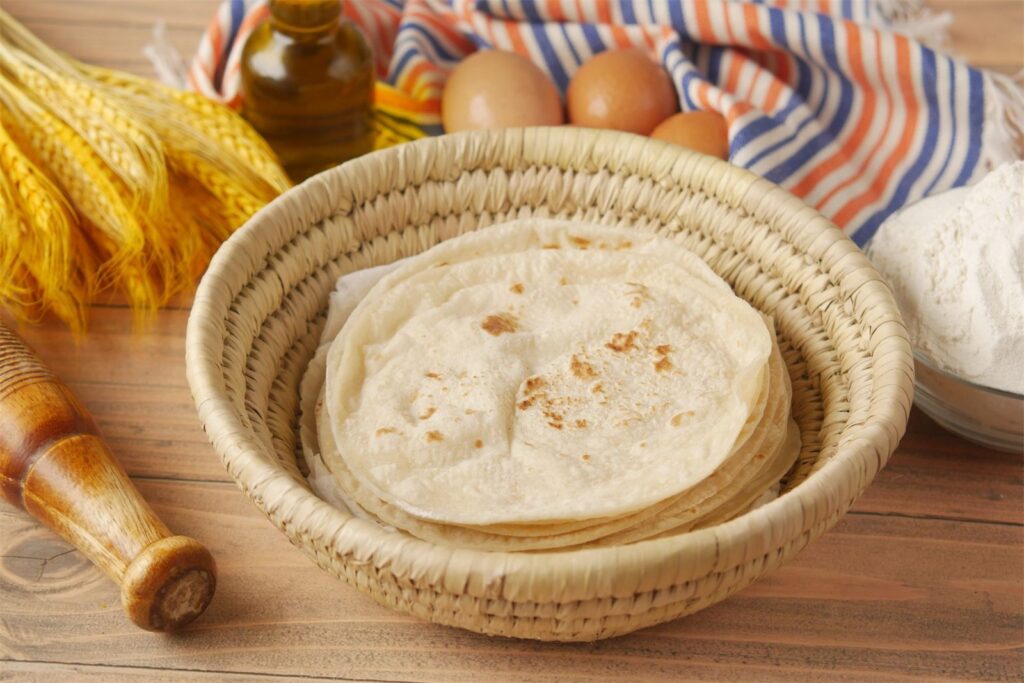
Roti and chapati are the same unleavened whole wheat flatbread in most homes, cooked on a tawa. Naan is a leavened bread baked in a tandoor in restaurants. Serve roti with pressure-cooked dal finished with a tadka of spices in hot oil, a mild Indian curry, or any curry from our guide to the types of Indian curry.
New to Indian cooking? Our beginner’s setup guide for a US kitchen covers the tools, and a good Indian cookbook for beginners gives you a tested roti recipe to pair with these fixes.
Frequently Asked Questions
Why is my roti not puffing up?
Usually dry dough, uneven rolling, a hole, or a pan that is not hot enough. Fix the dough, roll evenly and use medium-high heat.
Why is my roti hard?
Dry dough, too much dusting flour, low heat or cooking too long.
How do you make roti puff without a gas flame?
After the second flip, press the edge with a folded kitchen towel to push the steam across. If it still will not puff, microwave it for about 30 seconds.
Should roti dough be soft or stiff?
Soft and slightly tacky. America’s Test Kitchen cites a starting point of water at 80 percent of the flour’s weight; more water means more steam and a softer roti.
How long should roti dough rest?
At least 30 minutes, covered. Up to an hour is fine.
How do you keep roti soft after cooking?
Stack hot rotis and cover them loosely with a cloth. Reheat leftovers between damp paper towels.
Next: how the two breads differ in our guide to naan vs roti.