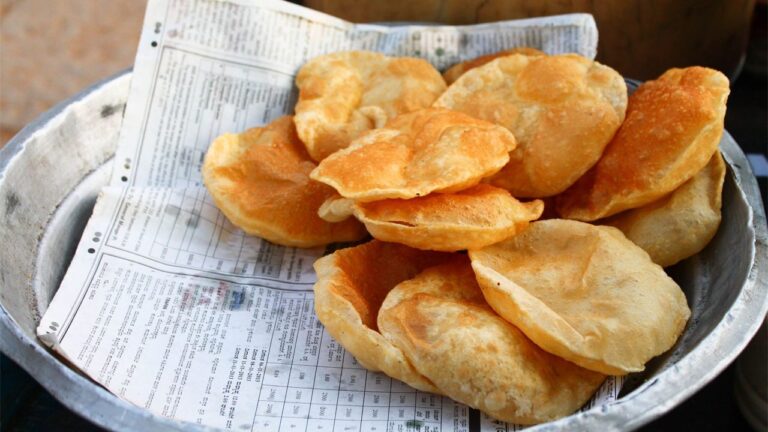
Naan vs roti comes down to two very different breads that both end up next to a curry. Naan is the thick, soft, blistered bread most US Indian restaurants bring to the table. Roti is the thin, plain whole wheat flatbread that Indian families eat every day. They differ in flour, leavening, fat and the way they are cooked, and that changes how they taste and what they do for a meal.
Quick answer
What is the difference between naan and roti?
Naan is a leavened bread made from white wheat flour, usually with yeast and yogurt, and baked on the wall of a hot tandoor oven, so it is thick, soft and chewy. Roti, also called chapati, is an unleavened flatbread of whole wheat flour and water, cooked on a dry griddle called a tawa, so it is thin, plain and everyday.

What is naan?
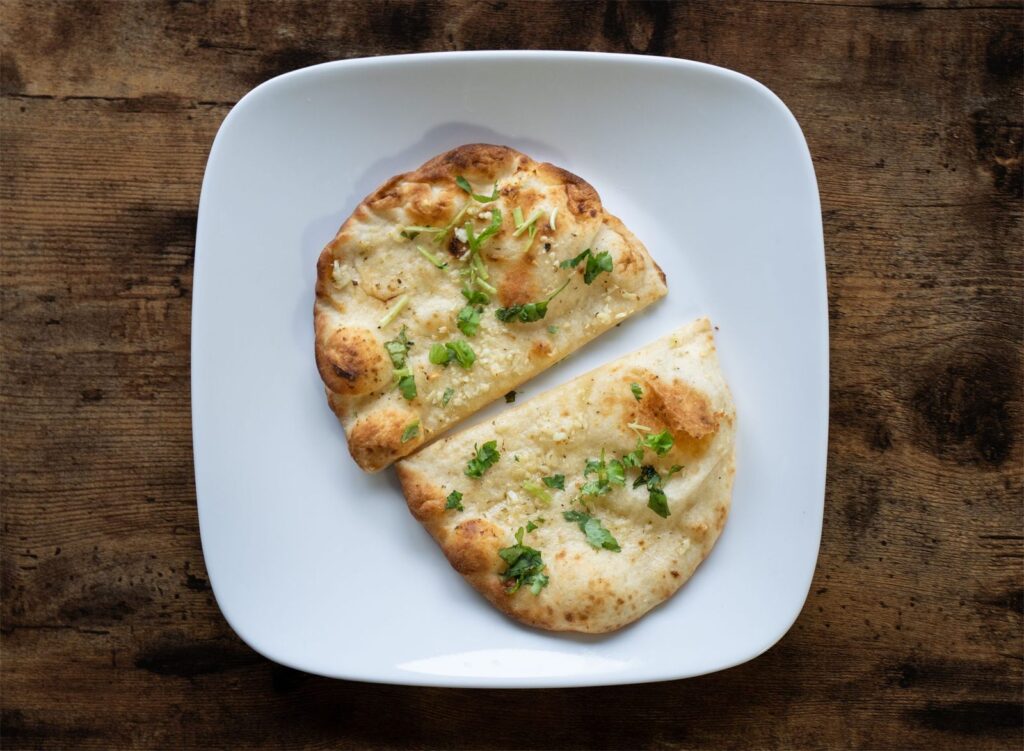
Naan is a leavened flatbread. King Arthur’s naan recipe uses white flour, instant yeast, full-fat yogurt and ghee or butter, and notes that naan is traditionally baked in a super-hot tandoor oven, which gives it puffiness and a hint of smoke. The dough is slapped onto the clay wall of the oven, where it bubbles and chars in moments.
Because the dough is enriched and risen, naan is soft, thick and slightly tangy. Restaurants brush it with butter or ghee and sell flavored versions such as garlic naan and cheese naan. The tandoor is the same oven that cooks tandoori chicken; our guide to tikka vs tandoori explains how that oven shapes the menu.
What is roti?
Roti is the everyday bread of North Indian homes. America’s Test Kitchen describes rotis as unleavened rounds made from little more than whole wheat flour (chakki atta) and water, cooked on a hot, slightly concave steel griddle called a tawa. As the water in the dough turns to steam, a well-made roti balloons up.
Roti is thin, soft and plain, with a nutty whole wheat flavor. It is torn by hand and used to scoop dal and vegetables. It is usually made fresh at each meal, often with a little ghee brushed on top. Layered with ghee and folded, the same dough becomes paratha; see paratha vs roti.
Naan vs roti: side by side
| Feature | Naan | Roti (chapati) |
|---|---|---|
| Flour | White wheat flour (all-purpose or bread flour) | Whole wheat flour (atta) |
| Leavening | Yeast, sometimes baking powder | None |
| Dairy and fat | Yogurt or milk, ghee or butter | Usually none in the dough; ghee on top is optional |
| Cooked in | Tandoor (clay oven) | Dry tawa, often finished over a flame |
| Texture | Thick, soft, chewy, blistered | Thin, soft, light |
| Where you see it | Restaurants, special meals | Home cooking, every day |
| Best with | Rich, creamy curries and kebabs | Dal, vegetables, everyday curries |
| Vegan? | Rarely (yogurt, butter) | Often, if no ghee is added |
Is chapati the same as roti?
Mostly, yes. In much of North India, roti and chapati are two names for the same plain whole wheat flatbread, and ATK uses them interchangeably. Some families use “chapati” for the bread cooked only on the tawa and “phulka” for one puffed over an open flame. “Roti” is also a broader word for bread in Hindi, so menus use it for other flatbreads too, such as tandoori roti, which is a whole wheat bread baked in the tandoor.

Which is healthier, naan or roti?
Roti, for most people, because a piece is smaller, made from whole wheat and usually has no butter in the dough. Per 100 grams the two are closer than you might expect, so the size of the piece and the butter on top matter most. USDA FoodData Central lists these values for store-bought breads:
| USDA record | Calories per 100 g | Fiber per 100 g | Sodium per 100 g | One piece |
|---|---|---|---|---|
| Naan, plain | 291 | 2.2 g | 465 mg | 90 g, about 262 calories |
| Naan, whole wheat | 286 | 4.8 g | 467 mg | Not listed |
| Chapati or roti, plain | 297 | 4.9 g | 409 mg | 68 g, about 202 calories |
| Chapati or roti, whole wheat (frozen) | 299 | 9.7 g | 298 mg | 43 g, about 129 calories |
Two things stand out. Whole wheat roti has far more fiber than plain naan, and a typical roti is a smaller piece. Restaurant naan is often larger than the USDA’s 90 gram piece and is brushed with butter, while homemade roti may have no added fat at all. If you are watching sodium, plain roti made at home with little or no salt is the easiest choice.
Which bread goes best with curry?
Both work, but they suit different meals. Naan’s soft, rich crumb stands up to creamy restaurant curries such as butter chicken and tikka masala (our butter chicken vs tikka masala guide compares the two) and to dal makhani. Roti suits lighter, everyday dishes: dal tadka, sabzi, chole and saag. Our comparisons of dal makhani vs dal tadka, chana masala vs chole and saag vs palak paneer cover those dishes.
For a tour of the dishes you can pair them with, see our guide to the types of Indian curry.

Can you make naan without a tandoor?
Yes. Few US kitchens have a tandoor, so home recipes cook naan on very hot iron instead. King Arthur’s recipe uses a cast iron pan or electric griddle over medium-high heat, with each side cooked for less than a minute. The result is softer and less charred than tandoor naan, but close. A broiler is another home method some cooks use for the blistered top. For leftovers, see how to reheat naan so it stays soft.
What do you need to make roti at home?
A rolling pin, whole wheat flour (Indian atta from an Indian grocery gives the softest result) and a hot, flat pan. A traditional tawa is ideal, but ATK notes that a cast iron or carbon steel skillet works as a stand-in. Our guide to the best tawa for roti on US stoves covers gas, electric and induction, and our comparison of cast iron vs nonstick tawa helps you choose the material.
The hardest part is getting roti to puff. Dough that is too dry, uneven rolling or a pan that is not hot enough will keep it flat; our guide on why roti won’t puff up lists each cause with a fix. If you are setting up a kitchen from scratch, our beginner’s guide to Indian cooking in a US kitchen covers the other tools.

Frequently Asked Questions
What is the difference between naan and roti?
Naan is a leavened white flour bread, usually made with yeast and yogurt and baked in a tandoor. Roti is an unleavened whole wheat flatbread cooked on a dry tawa. Naan is thick and soft; roti is thin and plain.
Which is healthier, naan or roti?
Roti, in most cases. USDA data show plain naan has 2.2 g of fiber per 100 g against 4.9 g for plain roti, and a typical roti is a smaller piece with no butter in the dough.
Is chapati the same as roti?
Yes, in most North Indian homes the words mean the same whole wheat flatbread. Some families call the flame-puffed version phulka.
Is naan made with yeast?
Usually. Most naan recipes use yeast, and many add yogurt for tang and softness. Some quick versions use baking powder instead.
Can you make naan without a tandoor?
Yes. Cook it in a very hot cast iron pan or on an electric griddle, a little under a minute per side, then brush with butter or ghee.
Next: top your dal with a tadka of spices tempered in hot oil.