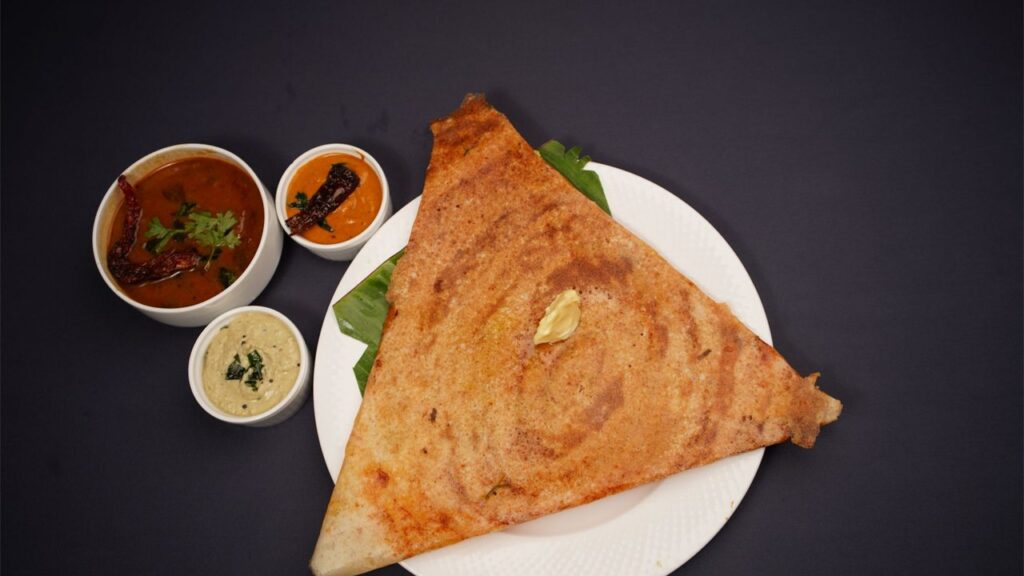
Dosa vs uttapam is the South Indian version of crepe vs pancake. A dosa is spread thin and cooked until crisp, then folded, often around spiced potatoes. An uttapam is poured thick, stays soft in the middle, and has onion, tomato, chili and herbs cooked right into the top.
Both usually come from the same fermented rice and lentil batter, although sources describe that batter in slightly different ways. Below we sort out what they agree on, compare the two side by side, and suggest which to order first.
Quick answer
What is the difference between dosa and uttapam?
Dosa is a thin, crisp, crepe-like pancake, served plain or folded around a filling. Uttapam is thicker and softer, with toppings such as onion and tomato pressed into the batter as it cooks. Both are made from fermented rice and urad dal batter, and both come with sambar and chutney.

Dosa vs uttapam: side by side
| Feature | Dosa | Uttapam |
|---|---|---|
| Closest US comparison | Crepe | Pancake |
| Batter | Fermented rice and urad dal, thin enough to spread | The same batter, used thick |
| Texture | Crisp, light | Crisp base, soft and fluffy middle |
| Toppings or filling | Plain, or filled (masala dosa has potato) | Vegetables cooked into the top |
| Heat | Hot pan, medium-high to crisp | Low to medium, so the middle cooks |
| Flipping | Often cooked on one side, then folded | Usually flipped; sources differ |
| Cooking time | Shorter | Longer, because it is thick |
| Skill needed | Spreading it thin takes practice | More forgiving |
| Served with | Sambar, coconut chutney, podi | Sambar, chutney, podi |
Is uttapam made from dosa batter?
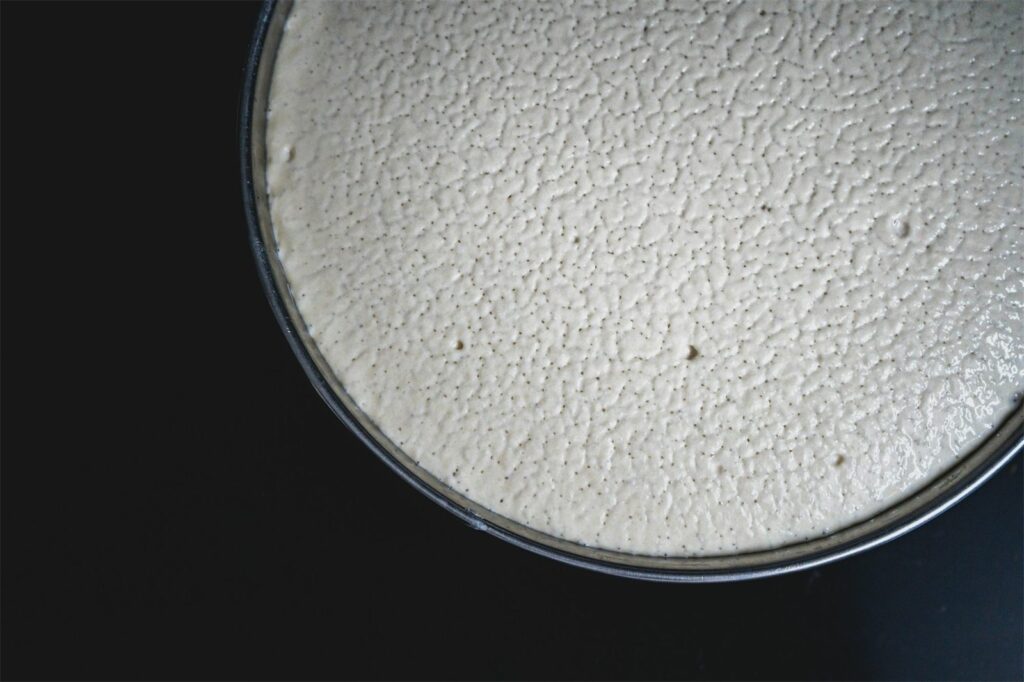
Usually, yes. SBS Food, in its note on uttapam by Dani Valent, says uttapam, idli and dosa are made with the same fermented batter. Spread it thin and you have dosa; leave it thicker and you have uttapam. Sources part ways on the details:
- Same batter, less water. Sharmis Passions uses one idli and dosa batter but skips the splash of water usually added for dosa.
- Same batter, same thickness. Swasthi’s Recipes says uttapam batter should match dosa batter: thick, yet still pourable.
- Older batter. A 2025 Slurrp article says homes often make uttapam when the batter has fermented slightly past its best for dosa.
- Different batter. A 2022 Slurrp piece lists urad dal for one and black gram for the other. Those are two names for the same pulse, so this is not a real difference.
Ratios vary too. Wikipedia gives rice to lentils of 3:1 or 4:1 for dosa and 3:1 for uttapam, well within the range any one family might use.
What is uttapam?
Uttapam (also uthappam or oothapam) is a thick, savory South Indian pancake, eaten mostly for breakfast or a light dinner. Wikipedia classes it as a type of dosa and says the Tamil name means “poured appam,” since it is poured on a flat skillet rather than cooked in a round-bottomed appam pan.
Onion, tomato, green chili, bell pepper and cilantro are the standard toppings; grated carrot and coconut are common. They are scattered over the wet batter and patted in. A plain uttapam with spiced lentil powder (podi) is popular too.
What is dosa?
Dosa is a thin crepe of the same kind of batter, cooked on a hot griddle with oil, ghee or butter, then rolled, folded or shaped into a cone. Masala dosa adds a potato filling; paper dosa is extra thin; rava dosa is made with sooji, the Indian semolina, instead of plain rice batter. Our explainer on what masala means in Indian food covers the menu word.
Crispness is partly modern. Swasthi writes that traditional dosai were much thicker, and that Udupi restaurants popularized the thin golden kind. That is why a menu may list a set dosa or kal dosa, a soft, thick dosa that looks like an uttapam without toppings.

How cooking differs: flipping, lid, oil and pan
Thickness drives everything. A dosa needs a hot pan and a quick hand so the thin layer browns and crisps. Uttapam needs gentler heat so the middle cooks before the base burns.
- Pan heat: Swasthi starts uttapam on a hot pan so the batter rises, then cooks on low to medium. For dosa, the same site calls for a hot tawa and medium-high heat to crisp.
- Flipping: Valent says uttapam generally does not need flipping. Swasthi flips to be sure the inside is cooked, and Wikipedia describes flipping as well. Thick toppings are the best reason to flip.
- Lid: Sharmis Passions covers one version for 2 to 3 minutes on low to medium heat, which steams the top.
- Oil: a drizzle around the edge for both.
Any flat, well-greased griddle works. Our picks for the best tawa for US stoves list sizes, and cast iron vs nonstick tawa weighs crisping against easy release. The pan is the same one used for the wheat breads in paratha vs roti.

What is the difference between idli and uttapam?
Idli is steamed; uttapam is griddled. The same batter poured into small molds and steamed becomes idli, a soft, white cake. Poured thick on a greased pan, it becomes uttapam, with a browned base and toppings. So one tub of batter covers three dishes, which is why many Indian grocery stores in the US sell it ready made.
Making your own means rice and urad dal. Swasthi prefers sona masoori for crisp dosa and idli rice for soft idlis; see sona masoori vs basmati for the rice, the guide to types of dal for the lentil shelf, and our urad dal substitute guide before you swap the dal out, since it is hard to replace in batter.
What do you eat with uttapam and dosa?
Both come with sambar and coconut chutney. Dosa, being crisp, is torn and dipped. Uttapam is soft enough to soak up sambar, so it works well with the stew poured alongside. For the bowls that come with them, see sambar vs rasam.
Which should you order first?
- You want crunch: plain, paper or masala dosa.
- You want something soft and filling: onion or mixed vegetable uttapam.
- You want potatoes: masala dosa.
- You are sharing with kids: uttapam holds together in pieces like a small pizza.
- You are cooking at home: start with uttapam. A thick pancake forgives what a thin dosa does not.

Frequently Asked Questions
What is the difference between dosa and uttapam?
Dosa is thin, crisp and often filled. Uttapam is thick, soft and topped with vegetables that cook into the batter. Both are griddled from fermented rice and urad dal batter.
Is uttapam made from dosa batter?
Usually. Many cooks use one batter for idli, dosa and uttapam and simply add less water for uttapam or pour it thicker. Some keep slightly older, more sour batter for it.
Is uttapam thicker than dosa?
Yes. Uttapam is poured thick like a pancake and barely spread, while dosa is spread into a thin layer so it turns crisp.
What do you eat with uttapam?
Sambar, coconut or tomato chutney, and podi, a spiced lentil powder mixed with oil or ghee. It is filling enough to eat as a meal.
Is dosa gluten free?
Plain dosa batter is rice and urad dal, which contain no wheat, but rava dosa uses semolina. The Gluten Intolerance Group’s Indian food guide warns that hing is often processed with wheat and may be in soups, sauces and chutneys, and advises asking about cross-contact. Our page on what asafoetida (hing) is has more.
What is the difference between idli and uttapam?
Idli is steamed in molds into soft white cakes. Uttapam is the same kind of batter cooked on a greased griddle with toppings, so it has a browned base.