Biryani vs pulao is the question behind two of the most common rice dishes on Indian, Pakistani and Bangladeshi menus in the US. Both are rice cooked with spices and often meat or vegetables, and both descend from the same family of Persian rice dishes that gave English the word pilaf. The difference is in how they are built: one pot for pulao, layers for biryani.
Quick answer
What is the difference between biryani and pulao?
Pulao is a one-pot dish: rice cooks with meat or vegetables in a measured amount of water or broth until it absorbs the liquid, and it is lightly spiced. Biryani is layered: part-cooked rice goes over a separately spiced meat or vegetable masala, and the pot is sealed and steamed (dum). Biryani is richer, more strongly spiced and usually the main dish.
How is pulao made?
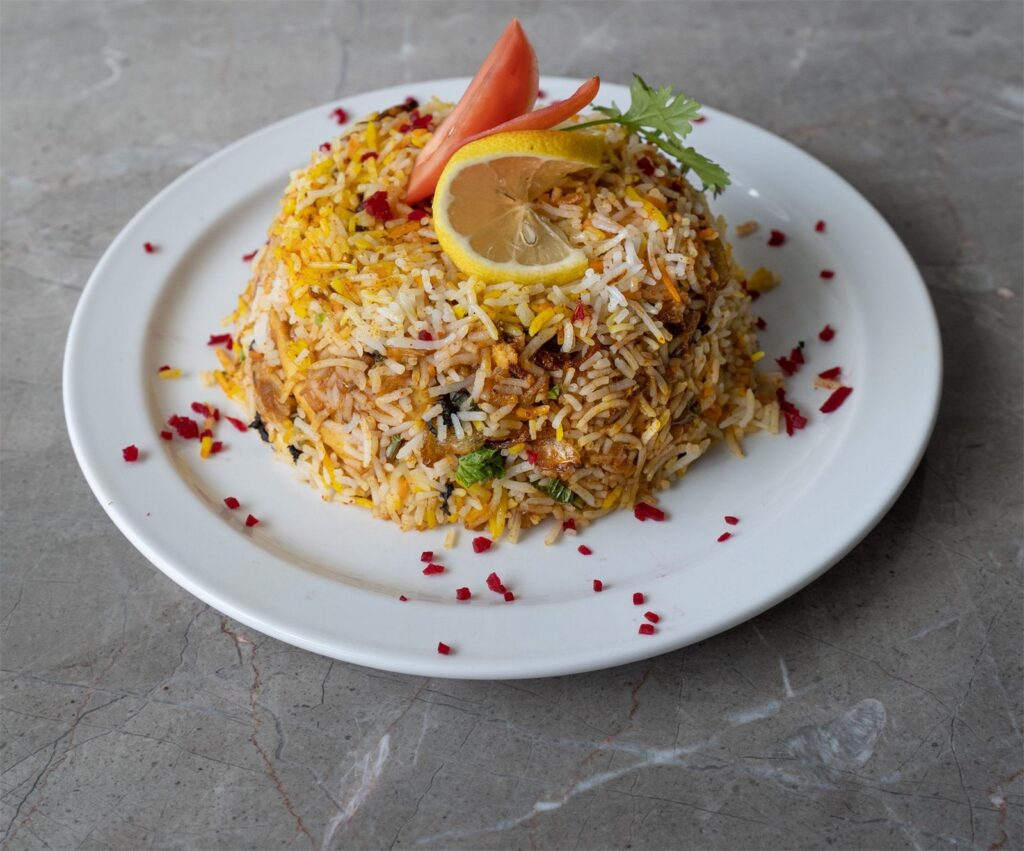
Pulao is made by the absorption method. Writing for HuffPost India, Chirag Taneja describes it as a one-pot dish: the meat or vegetables are cooked first, then the rice is added and everything cooks together in a set amount of water, which the rice soaks up. Whole spices such as bay leaf, cinnamon and cardamom are common, and some versions add dried fruit.
The flavor is gentle. In a TASTE feature on Pakistan’s pulao and biryani rivalry, Maryam Jillani describes pulao as softly flavored, with its depth coming from a gently spiced meat broth. A simple pea pulao or vegetable pulao on a US menu follows the same one-pot idea without meat stock.
How is biryani made?
Biryani is made in two parts that meet in the pot. The meat or vegetables are cooked separately in a spiced masala (often with yogurt), the rice is boiled until partly cooked (boiled too long, it goes soft; see why biryani turns mushy), and the two are layered. The pot is then covered tightly and cooked on low heat, a method called dum, so the rice finishes in the steam and takes on the aroma of the layer below.
Cooks also sort biryanis into kacchi and pakki styles, depending on whether the meat goes into the pot raw and marinated or already cooked. Saffron or colored milk on top gives the familiar mix of white and golden grains. Our explainer on what masala means in Indian food covers the spiced base that sits under the rice.
Yogurt in a biryani marinade can split when it hits high heat, so many cooks stir it in off the heat or cook the masala gently; our fix for yogurt that curdled in a curry explains why. The spice mix often ends with garam masala, and our guide to making garam masala at home covers the blend. If a recipe calls for a packaged blend you do not have, see the biryani masala substitute guide.

Biryani vs pulao: side by side
| Feature | Biryani | Pulao |
|---|---|---|
| Method | Layered, then steamed on low heat (dum) | One pot, rice absorbs the liquid |
| Rice | Boiled separately until part-cooked | Raw rice cooked in measured water or broth |
| Spice | Strong, complex, often chili and herbs | Mild, mostly whole spices |
| Color | Mixed white and saffron-gold grains | Even color, pale to light brown |
| Role in the meal | Main dish | Usually a side, served with a curry |
| Usually served with | Raita, salan or a salad | Korma, dal or another curry |
| Time and effort | Longer, several steps | Shorter, one pot |
Is pulao the same as biryani?
No, but the line between them is not sharp. Both are spiced rice dishes with the same roots, and a rich meat pulao can taste close to a mild biryani. The clearest test is method: if the rice and the meat or vegetables cooked together in one liquid, it is pulao; if part-cooked rice was layered over a separate masala and steamed, it is biryani.
The blurriest case is vegetable biryani against vegetable pulao. Some cooks argue a biryani without meat is really a pulao, while others treat a layered, dum-cooked vegetable dish as a true biryani. TASTE notes that biryani alone has more than a hundred regional styles, and cooks in different places follow different rules, so expect arguments rather than a verdict.

Where do biryani and pulao come from?
Most food historians place pulao first. TASTE cites historian Lizzie Collingham, who traces pulao to a simple Persian dish of nomads and soldiers and dates biryani later, to the Mughal court under Emperor Akbar, when Persian pilaf met Indian spices. Pilaf, pilau, plov and pulao are all members of the same rice family.
Not everyone accepts a purely Persian story. HuffPost India points to the food historian K.T. Achaya, who argued that words for a pulao-like rice dish existed in Sanskrit and Tamil before the Mughals arrived. Biryani then grew into regional styles, such as Hyderabadi, Lucknowi and Kolkata biryani, each with its own claims to being the real one.
Which is spicier, biryani or pulao?
Biryani is almost always spicier. Its masala layer carries ground spices, chili and herbs, while pulao relies on a few whole spices for aroma rather than heat. The heat in a restaurant biryani still varies widely, so ask if you are sensitive. Our guide to the mildest Indian curry helps with the rest of the order, and if a homemade biryani comes out too hot, see how to make curry less spicy.
Which is healthier, biryani or pulao?
Pulao is usually the lighter of the two, because it uses less oil or ghee, fewer fried onions and a gentler spice mix. That depends entirely on the cook, though: a pulao made with rich mutton broth and ghee can be heavier than a vegetable biryani. Portion size and how much fat goes in matter more than the name.
How to tell them apart on a US menu
- Listed under main dishes or “biryani specials”: biryani, usually with a choice of chicken, goat, lamb, shrimp or vegetables.
- Listed under rice or sides: pulao, such as peas pulao or vegetable pulao, meant to go with a curry like those in our korma vs tikka masala comparison.
- Served with raita: often biryani, since the cool yogurt balances its spice.
Both use long-grain basmati rice. If you cook rice at home in a pressure cooker, our guide to the Instant Pot basmati rice ratio covers water and timing, and the guide to the types of Indian curry covers what to serve with either dish.

Frequently Asked Questions
What is the difference between biryani and pulao?
Pulao cooks rice with meat or vegetables in one pot until the rice absorbs the liquid. Biryani layers part-cooked rice over a separately spiced masala and steams it, so it is richer and more strongly spiced.
Is pulao the same as pilaf?
They belong to the same family. Pilaf, pilau, plov and pulao all come from Persian-style rice dishes cooked in broth, and the South Asian pulao is one regional branch of it.
What is dum biryani?
Dum biryani is biryani finished on dum: the layered pot is sealed and cooked on low heat so the rice steams in the aroma of the meat or vegetable layer. Most biryani is cooked this way.
Is biryani spicier than pulao?
Usually. Biryani’s masala layer carries ground spices and chili, while pulao uses a few whole spices for fragrance. Restaurant heat levels still vary, so ask when ordering.
Which is healthier, biryani or pulao?
Pulao is usually lighter, with less fat and fewer fried onions. A rich meat pulao can be heavier than a vegetable biryani, so the cook’s hand matters more than the name.